The news of Covid infections in Karnali do not readily reach the capital. But remote districts in this far-flung region have some of the highest coronavirus fatality rates in the country.
There are multiple factors involved: poverty, limited health and transport infrastructure, shortage of medical staff, lack of testing, and family members returning from India. People in the remote mountains of this historically neglected region now also have to survive on limited food.
A recent survey in outback communities of Karnali province shows that the most serious socio-economic impact of the pandemic has been on access to food – a full one-third of households surveyed reported not having enough food. Another 19% said they were even heavier in debt, and 14% lost their livelihood.
To be sure, the Karnali has suffered chronic food insecurity even before the pandemic, and almost every household has at least one member working in cities or in India. But the Covid crisis has made it worse.
The survey was conducted among 395 people across 21 Karnali municipalities by USAID BHAKARI program implemented by the global humanitarian aid group Mercy Corps with an aim to improve food security in the region. Ten per cent of those polled were people with disabilities.
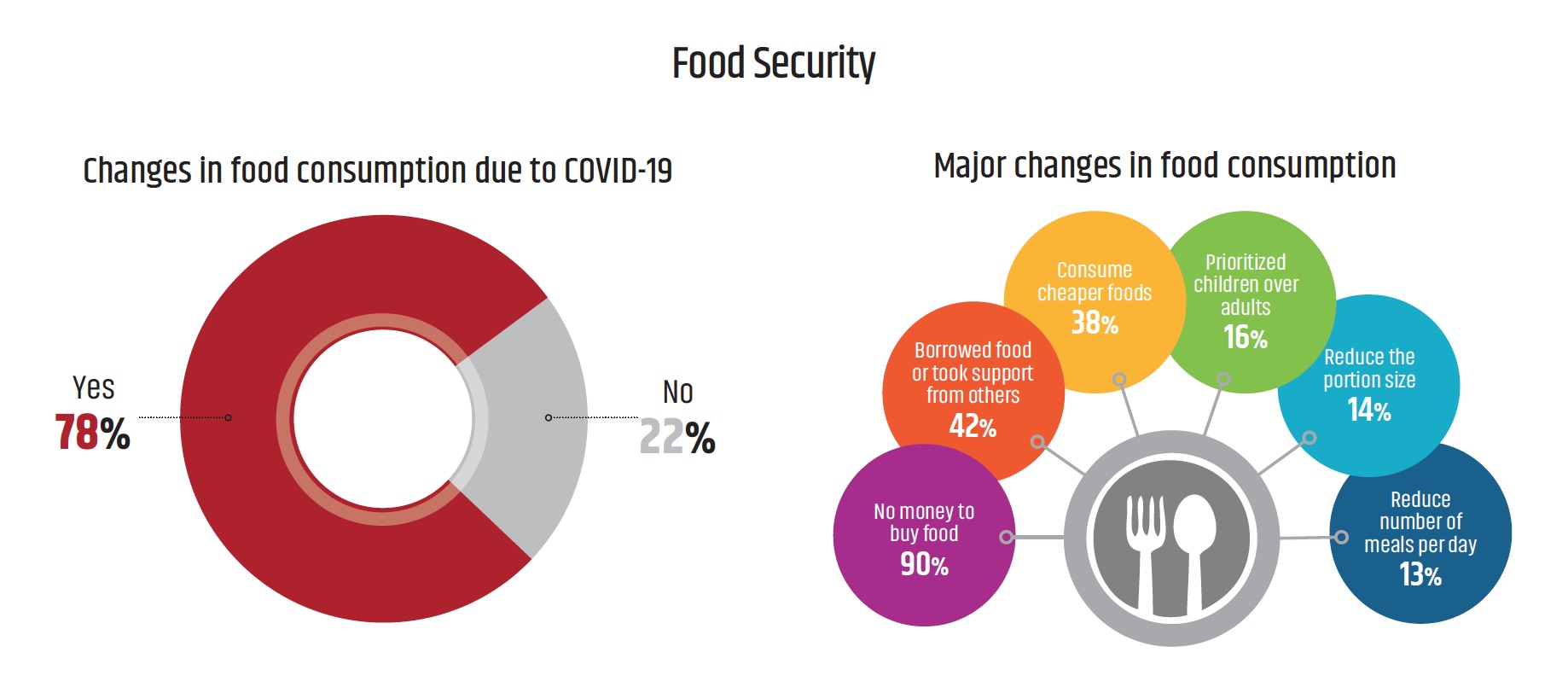
Some 78% of those surveyed said they had to change their diet and as high as 90% reported not having money to buy food, 38% switched to cheaper food items while 16% of the households resorted to prioritising children over adults with limited meals. Another 14% said they reduced the size of meal portions, 13% reduced the number of meals per day.
These figures may lead to a long-term impact on the physical and mental growth of children. The coronavirus crisis and subsequent lockdowns have pushed millions of Nepalis back below the poverty line leading to an epidemic of childhood malnutrition.
“The impact of drought and the second wave are significant in the vulnerable communities in Karnali province, further increasing the food crisis in the region. We have reached a critical point,” says Yugdeep Thapa of Mercy Corps.
Women and people with disabilities in particular have faced added challenges in the past 18 months since the outbreak of Covid-19. Of the total women surveyed, 67% are not getting access to hygiene products ranging from soap and sanitisers to menstrual pads. Limited access to health services due to lockdown-induced restrictions meant that 45% of the women couldn’t visit a health post or hospitals for reproductive health services.