
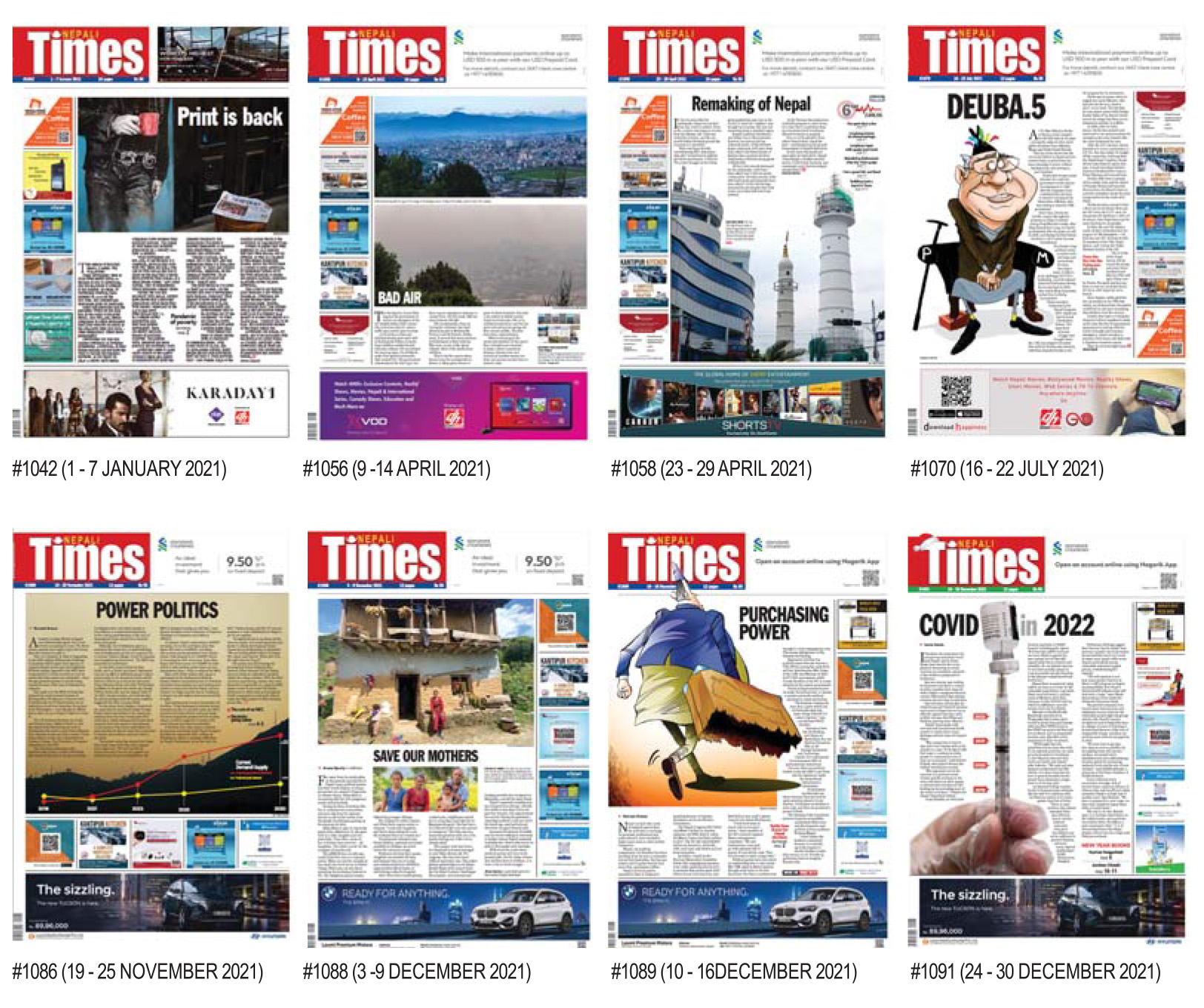
Exactly one year ago, this newspaper restarted its hardcopy edition 10 month after going digital-only. The 1 January 2021 #1042 of Nepali Times carried the bold banner: ‘Print Is Back’.
There was optimism in the air. We thought the worst was over with Covid-19 pandemic, the economy was going to revive and the country would bounce back.
Little did we know what 2021 had in store: the second wave crashed onto Nepal’s shores in April from India, the Delta variant overwhelming the country’s hospitals, and exhausting oxygen supply. Complaceny has set in again, but experts warn we have been caught with our pants down too often.
The WHO warned on Wednesday that the ominous Omicron variant is merging with Delta to create a Covid tsunami. Nepal has all the conditions (low vaccination rate, limited testing, crowding) for this highly transmissible strain to spread like wildfire again.
Wish we had better news for 2022. But things are not looking too rosy. Sectorwise:
Economy
Overseas remittances that had held steady despite the pandemic went down by 7.6% in October-November to Rs312 billion. Meanwhile, imports rose to Rs82 billion so far this fiscal year, while exports is lagging at mere Rs6.5 billion. The trade deficit increased to Rs150 billion in October-November, while foreign currency reserves dipped by $510 million to a near record low of $10.47 billion — enough only to last six months of imports.
Tourism revenue has collapsed, and government spending is stagnant. Banks are suffering a liquidity crisis, although that seems to be due to increased borrowing.
Things are not looking good in agriculture: rice harvests went down by 20% due to post-monsoon floods, and there is a chronic fertiliser crisis.
Janardan Sharma may have been a brilliant guerrilla commander, but he seems clueless as Finance Minister — he has no sense of urgency about the emergency. He and his boss are prone to gaffes that spook the market even more. This economic crisis is a result of populism and neglect. 2022 being an election campaign year, it is not likely to be addressed.