
Many Nepalis abroad who were working in jobs considered ‘unskilled’ are actually doing indispensable work for the countries they are in — even during COVID-19 lockdowns.
Many of their jobs entail exposure to a large number of people of varying backgrounds, making social distancing unfeasible. These ‘elementary’ jobs are physically demanding, but low paying with high recruitment costs, without adequate protection, and in sectors of the economy in which locals do not want to work.
Rama is a Nepali domestic worker in Lebanon. Her brother is a construction worker in Saudi Arabia. The coronavirus pandemic touches them in contrasting ways. Rama’s brother in Saudi Arabia has not had to report for work for a week now, while she has seen an increase in her workload.
“My brother told me over phone that he is bored as there is not much to do. I, on the other hand, have not had a moment free since the curfew started,” says Rama whose employer’s entire family is now at home all the time because they are not allowed to go out.
“Usually the family used to go out for dinners on Thursdays and Fridays, and I had it relatively easy, but now they are home all the time,” says Rama who misses her Sundays off that she spent with her Nepali friends. She added in Nepali: “Kam ko matra overtime, dam ko chahi chaina overtime.” (The work is overtime, but the money is not.)
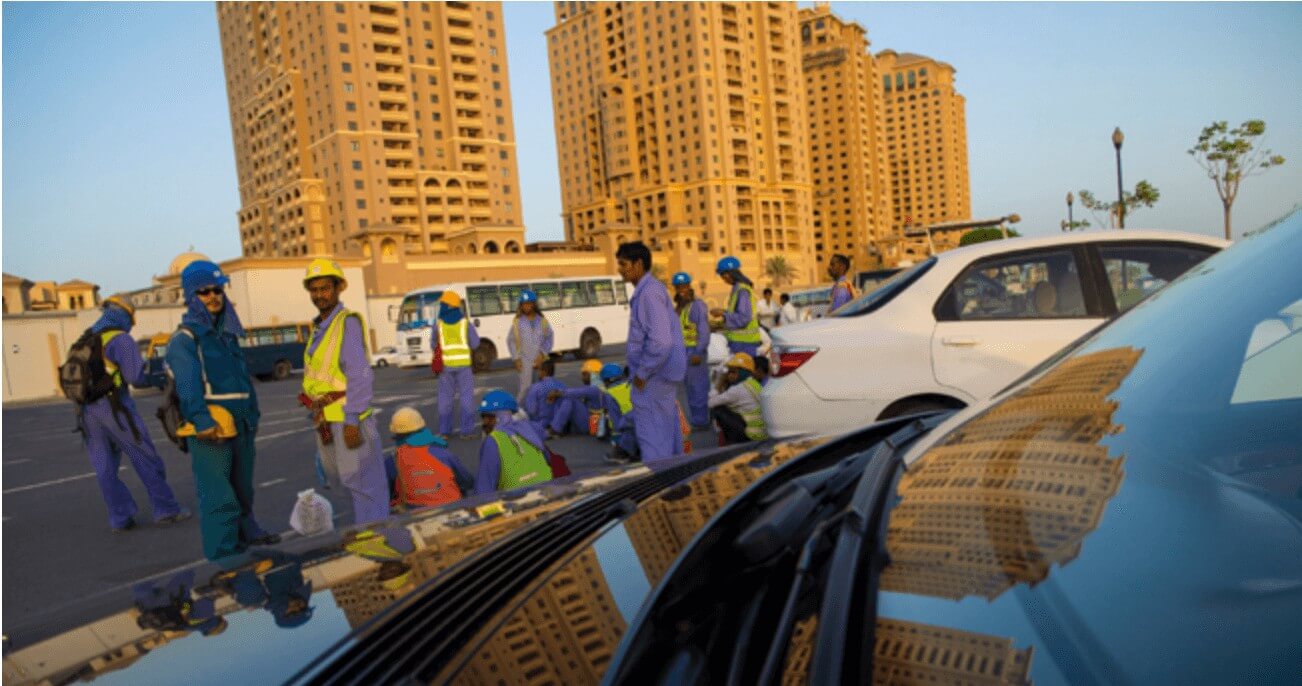
Nepalis quarantined in Qatar, Upasana Khadka
Many Nepalis work in WRP, the Malaysian company making latex gloves that are now in high demand because of the pandemic. On Wednesday, the United States lifted its ban on WRP gloves which was imposed after reports of human rights abuse of its workers.
One Nepali worker at the WRP factory in Kuala Lumpur told us over the phone: "Half of us are working and the other half opted out because of the current epidemic." Under Malaysia's lockdown law only half the workforce can be employed in companies that make essential items, but they are trying to convince the government that are vital for protection of healthcare workers.”

For Ramesh, who works as a security guard in a condominium in Malaysia, not much has changed. “My hours are the same: 8 hours regular work with 4 hours overtime. Other security guards who work in supermarkets have the added duty of checking the temperature of visitors at the entrance, but I don’t,” says Ramesh, who is worried about his cold, although he does not have a fever.