
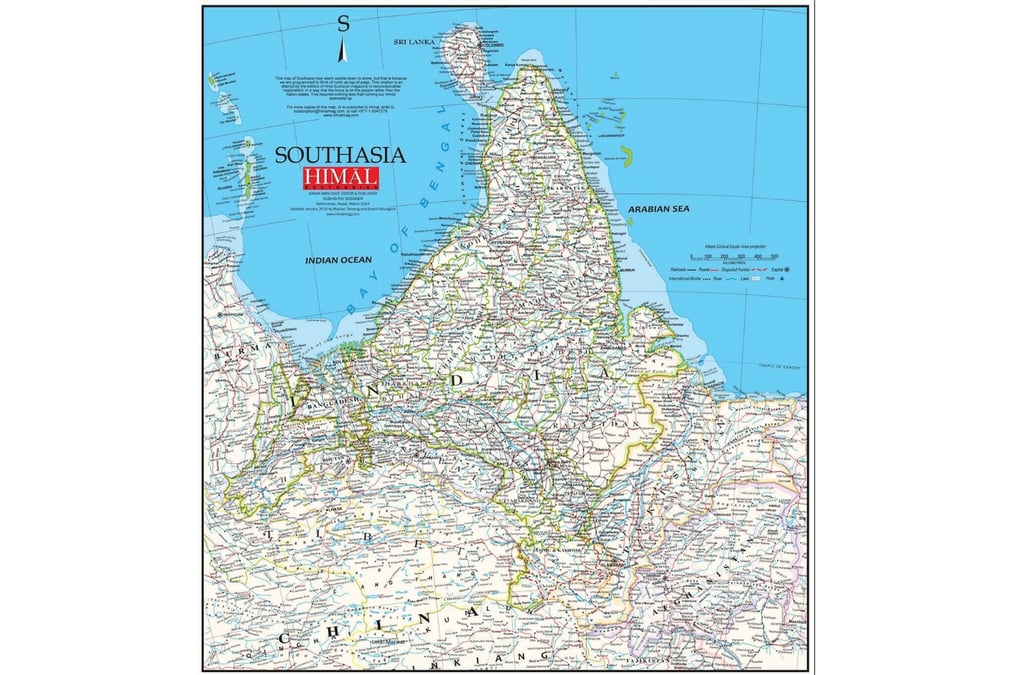
Throughout its 260-year history, Nepal has tried to keep an equilibrium between its two giant neighbours. Past rulers have tried to ensure friendly relations with India and China even if the two are not exactly friendly with each other.
But just how delicate this balancing act can be was thrown into sharp relief last week in two events.
A Nepali was among 25 killed in an attack in Kashmir last month, and at a seminar on regional terrorism this week in Kathmandu foreign policy wonks felt Nepal needlessly irritated India by not being more forthcoming in its condemnation of Pakistan.
Then, at the annual Kathmandu International Mountain Film Festival (Kimff) Chinese documentaries on Tibet were screened under a China-funded ‘Xizang Panorama’ showcase.
There was an immediate backlash against Kimff for accepting Chinese sponsorship and the use of ‘Xizang’, the Chinese name for Tibet. The films were said to be 'colonial propaganda', and Beijing’s attempt to erase Tibetan identity, independence, and self-determination.
'The term "Xizang" is not merely a geographic designation—it represents China's calculated campaign to replace "Tibet" in international discourse, seeking to erase a distinct and vibrant artistic, literary and spiritual identity,' a collective of Tibetan filmmakers and writers wrote to Nepali Times last week as Kimff was ongoing.
The Nepal government in its diplomatic language has started using ‘Xizang’ to refer to Tibet, and there was speculation that the Chinese lobbied with the government to pressure Kimff to show the films on Tibet. Kimff did not respond to our request for comment.
“While we can advocate for the rights and identity of the Tibetan community in activism and media, the reference to Tibet in our diplomacy will remain in line with our foreign policy with regards to China,” says international relations specialist Indra Adhikari.
The terrorism seminar and the film festival controversy were just the latest examples of how Nepal’s government and civil society are being increasingly squeezed by rival neighbours.
The rollback of Pax Americana under Trump means that emerging powers China and India are filling the gap. The result: a politically-weakened Nepali state is now more subservient than ever before.
Nepal’s strategy of equidistance is fraying at the edges as Kathmandu is buffeted by countervailing pressure from north and south.