

In 2024, renewables accounted for the largest share of growth in global energy supply. For the first time, solar and wind generation exceeded coal and gas in the European Union. In the United States, solar and wind reached 16%, overtaking coal.
In China, solar and wind generated about 20% of total power. More than 51% of India’s total installed electricity capacity now comes from non-fossil fuel sources.
Together, these shifts point to a system in transition at a time when the world is once again confronting a global energy crisis due to the blockade of the Strait of Hormuz. But this is not an isolated disruption — it is a structural signal reminding us that fossil fuel dependence is not only environmentally unsustainable, but also economically and geopolitically precarious.
History shows that crises can be turning points. They disrupt inertia, challenge established systems, and open space for transformation.
Many countries are responding to the war by accelerating their energy transitions. In Asia, India, Indonesia and Vietnam are scaling up renewables and electric mobility, while also exploring storage and grid upgrades.
China continues to lead globally in solar and wind expansion, rapidly increasing domestic capacity to reduce exposure to external shocks.
Japan and South Korea are investing in hydrogen, offshore wind and next-generation energy systems. South Korea is expanding community-based solar programs, linking clean energy with local development and economic benefits.
In Europe, the response has been both immediate and strategic. The European Union’s REPowerEU plan aims to reduce dependence on imported fossil fuels while accelerating renewables, improving efficiency, and diversifying supply. Germany, Spain, and Denmark are expanding wind and solar at scale, with renewables increasingly outcompeting fossil fuels.
Chile is advancing solar and green hydrogen, Brazil is strengthening its renewable-based power system, and South Africa is opening space for private renewable investment to address power shortages. Efforts are underway even in Cuba to scale renewables to reduce reliance on imported fuels.
Energy security and climate action are no longer competing priorities, they are deeply aligned. Renewable energy offers not just emissions reduction, but independence from volatile global markets. The question is no longer whether the transition will happen, but how quickly it can scale.
The current crisis is also reshaping global climate diplomacy. Initiatives such as the Santa Marta Conference, bringing together countries committed to accelerating the fossil fuel transition, signal growing political momentum for systemic change. These efforts reflect increasing frustration with slow progress and a recognition that incremental change is no longer sufficient.
This aligns with broader developments under the Paris Agreement. The outcome of the first Global Stocktake marked a historic shift in global consensus, reaffirming that the 1.5°C goal requires not just emissions reduction, but a fundamental transformation of energy systems.
The COP30 Presidency in Brazil has further championed this by advancing roadmaps for transitioning away from fossil fuels and scaling up clean energy deployment. It serves as a catalyst to translate global commitments into practical pathways, linking ambition with implementation.
NEPAL'S EXAMPLE
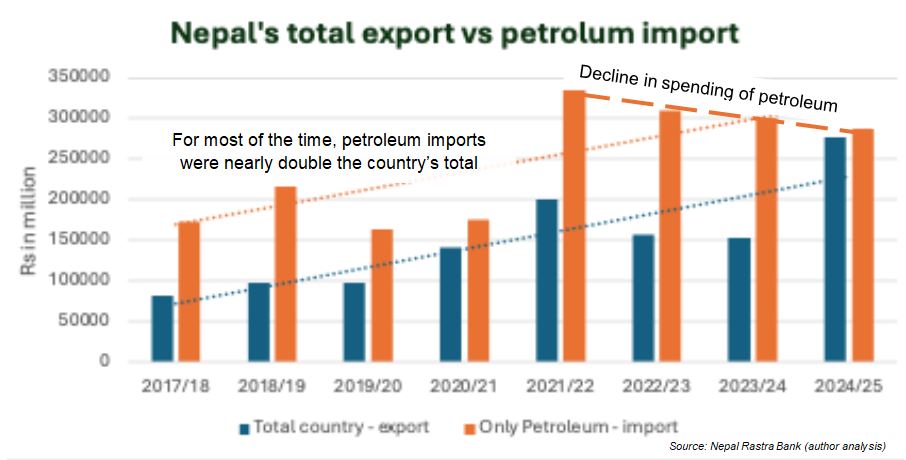
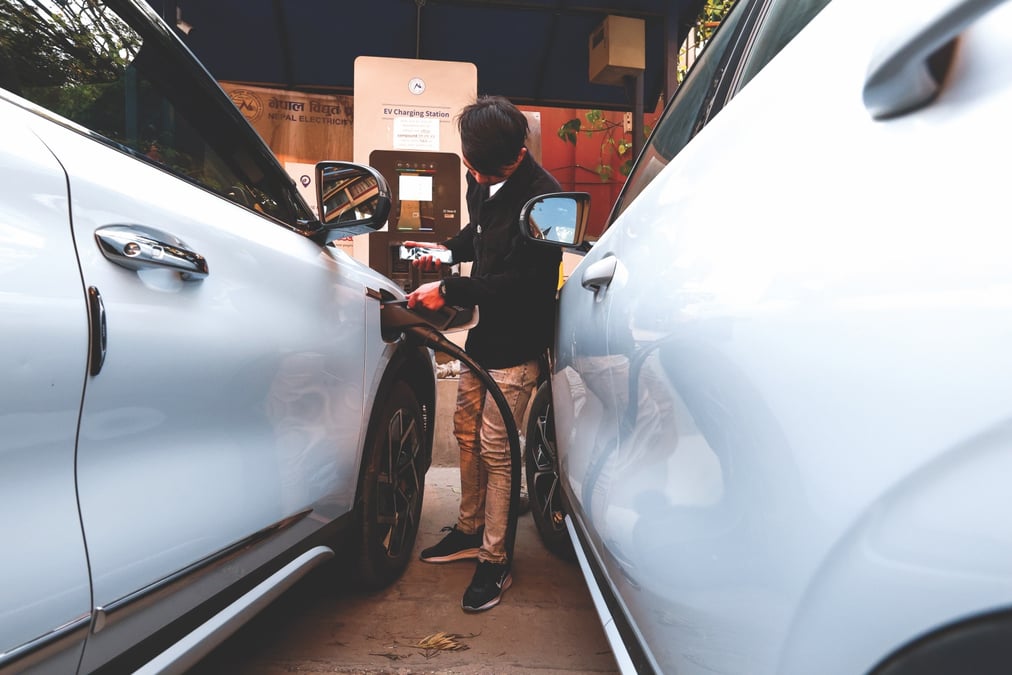
Despite rising global prices, Nepal’s overall spending on fuel imports has declined for the last four consecutive years, driven by the expansion of hydropower, increased electrification, growing adoption of electric vehicles (page 5) and electric cooking, and policy measures aligned with Nepal’s Nationally Determined Contributions (NDCs).
Together, these efforts are beginning to reshape the country’s energy landscape. Also, from last fiscal year the country is exporting clean hydro electricity.
Nepal’s experience shows that transitions do not always require massive technological breakthroughs. It often begins with incremental changes, better policies, targeted investments and shifts in behaviour. It demonstrates that even in the face of structural challenges, it is possible to reduce fossil fuel dependence while advancing development goals.
Too often, short-term responses to crises, such as fuel subsidies or increased fossil fuel production, undermine long-term goals. Rather than increasing dependence on fossil fuel, investments should focus on diversification, efficiency and clean energy systems.
The transition is not a question of feasibility, but of priorities. Choices made today will shape the future for decades to come.
We can choose to treat this as a temporary disruption, patching up the system and returning to business as usual. Or we can recognise it as a turning point, an opportunity to accelerate the transition to a more sustainable, resilient and equitable energy system.
What is needed now is the will to act and invest because every crisis holds the seeds of a new beginning.
Manjeet Dhakal is the Head of the LDC Support Team at Climate Analytics and Director for Climate Analytics South Asia.