
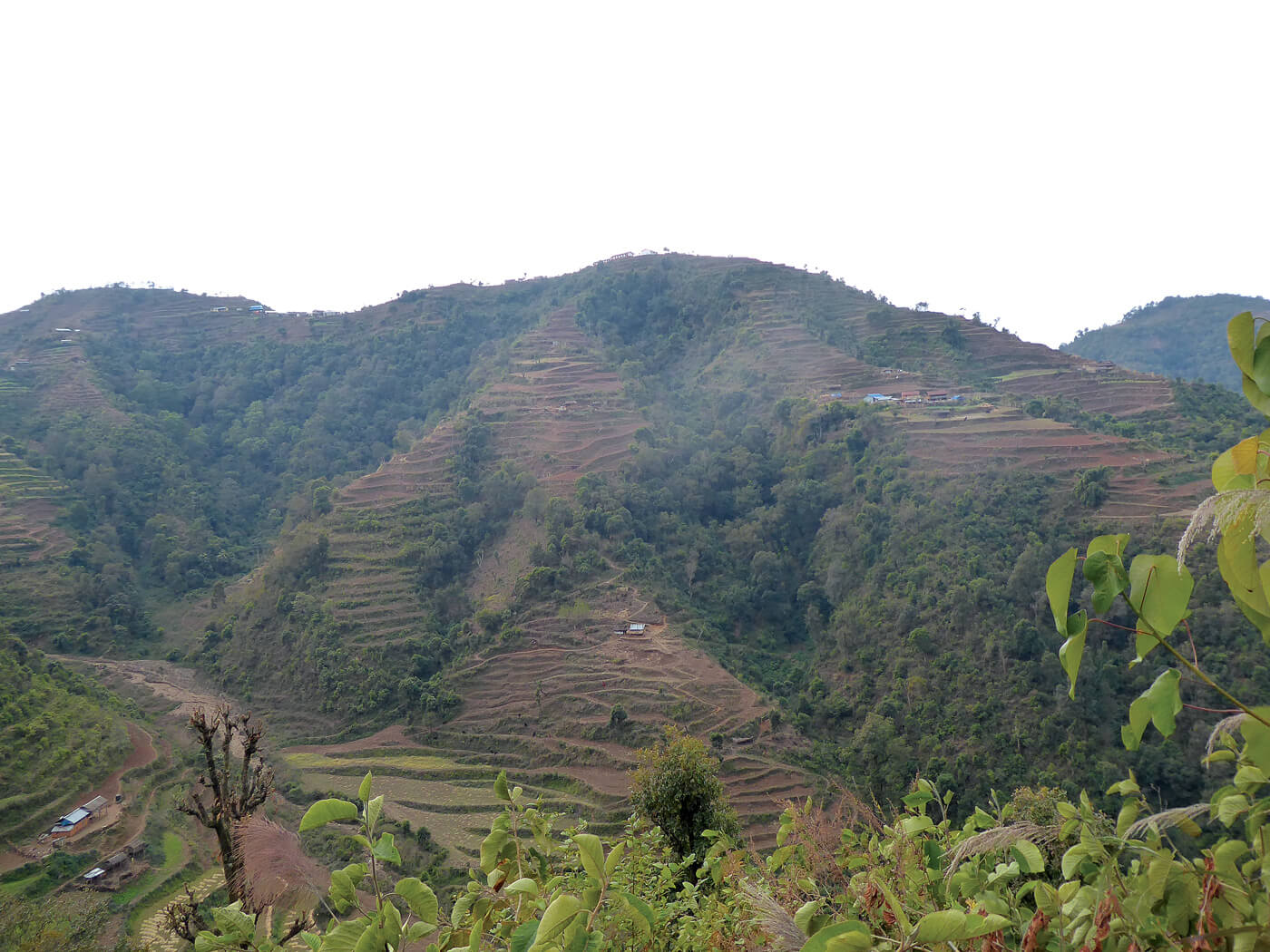
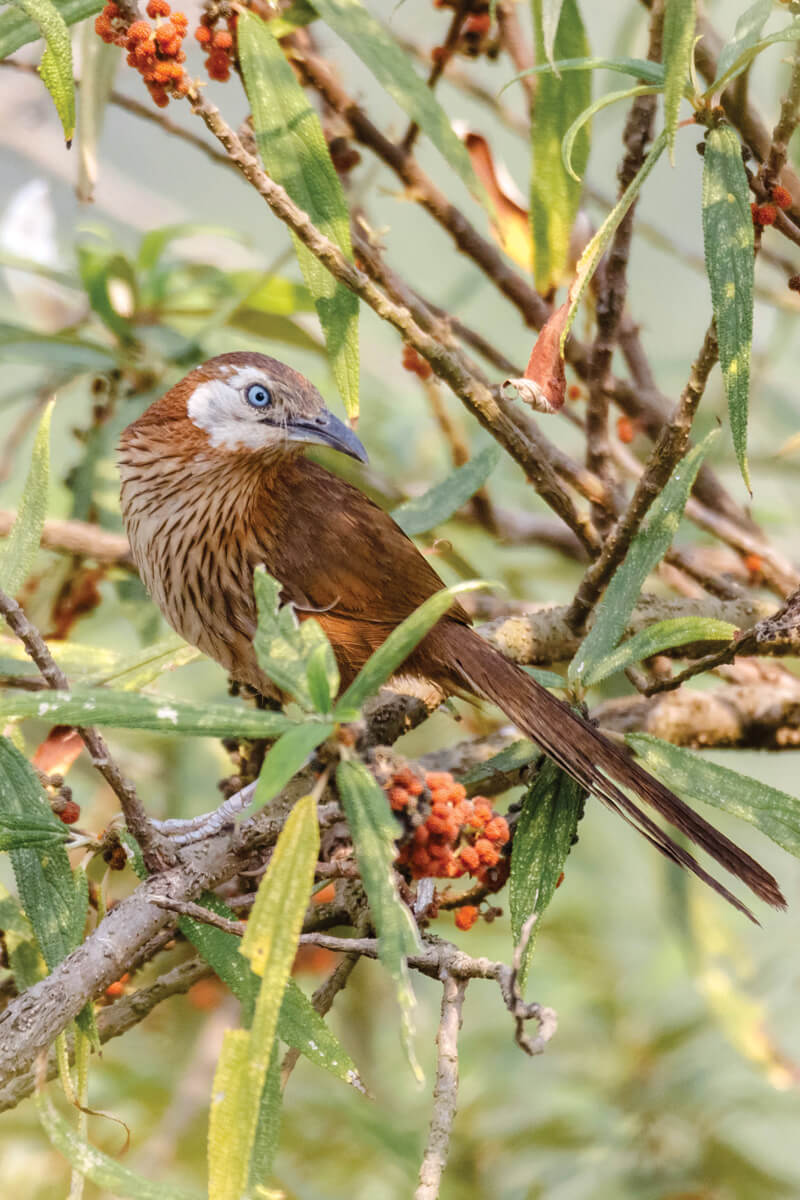
The ruined 250-year-old Gorkhali fortress of Upardang Gadi is located on the northern rim of Chitwan Valley. But that is not the only reason these forested mountains are special: this is also home to the Spiny Babbler, the rare bird found only in Nepal (pictured below).
Bird Life International and Bird Conservation Nepal have concluded that the Gadi-Siraichuli Forest is an Important Bird and Biodiversity Area (IBA) of international value. There are only 37 other IBAs in Nepal, and this is one of the few not located within a protected area.
Read also: In conservation, Nepal is not our of the woods yet, Sonia Awale
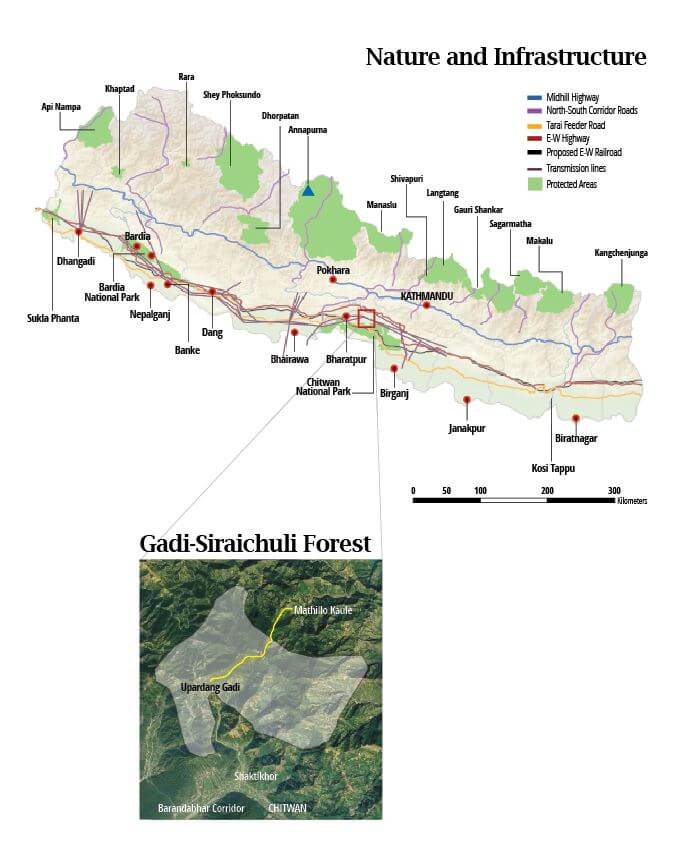
But now the forest is threatened by the construction of a new road that will be a short cut from Mathillo Kaule to Gadi (map). The alignment is along the steep forested slope, and locals are worried that it will destroy trees, disrupt water sources and threaten landslides. They have been protesting at Ichyakamana Rural Municipality to stop the road being built on this route.
Located at 1,150m, the Chepang village of Gadi lies at the foot of this forested slope that features a wide variety of shrubs, subtropical mixed broadleaf trees and wildlife. In fact, this is the largest and richest forest of this type remaining in Nepal, with 15 species of mammals, including the endangered Black Giant Squirrel (Ratufa bicolor).
The Spiny Babbler (Turdoides nipalensis) lives on terraces built by the Chepang people at the edge of the forest. The Gadi-Siraichuli Forest has one of the highest populations of this rare endemic bird in the country.
“The road will destroy the forest on the slope that is the main source of spring water for our villages. How can we live here without water?” asks Ganesh Thapa Magar, a farmer.
Another Gadi villager, Suk Bahadur Chepang, agrees: “My home is just below the forested hill where the new road is planned. Landslides in the monsoon will make it too dangerous to live there anymore.”
Besides these threats, the road will also put the 320 bird and 56 butterfly species found here at risk. Members of the Sauraha-based Bird Education Society have been visiting the area since the 1990s, and say it is a treasure trove for nature.
Bird species also include the Red-faced Liocichla (Liocichla phoenicea) a beautiful scarlet and brown bird that was thought to have become extinct in Nepal until it was re-sighted in 2016 after 178 years, by watchers from the Bird Education Society and the Nepalese Ornithological Union.