
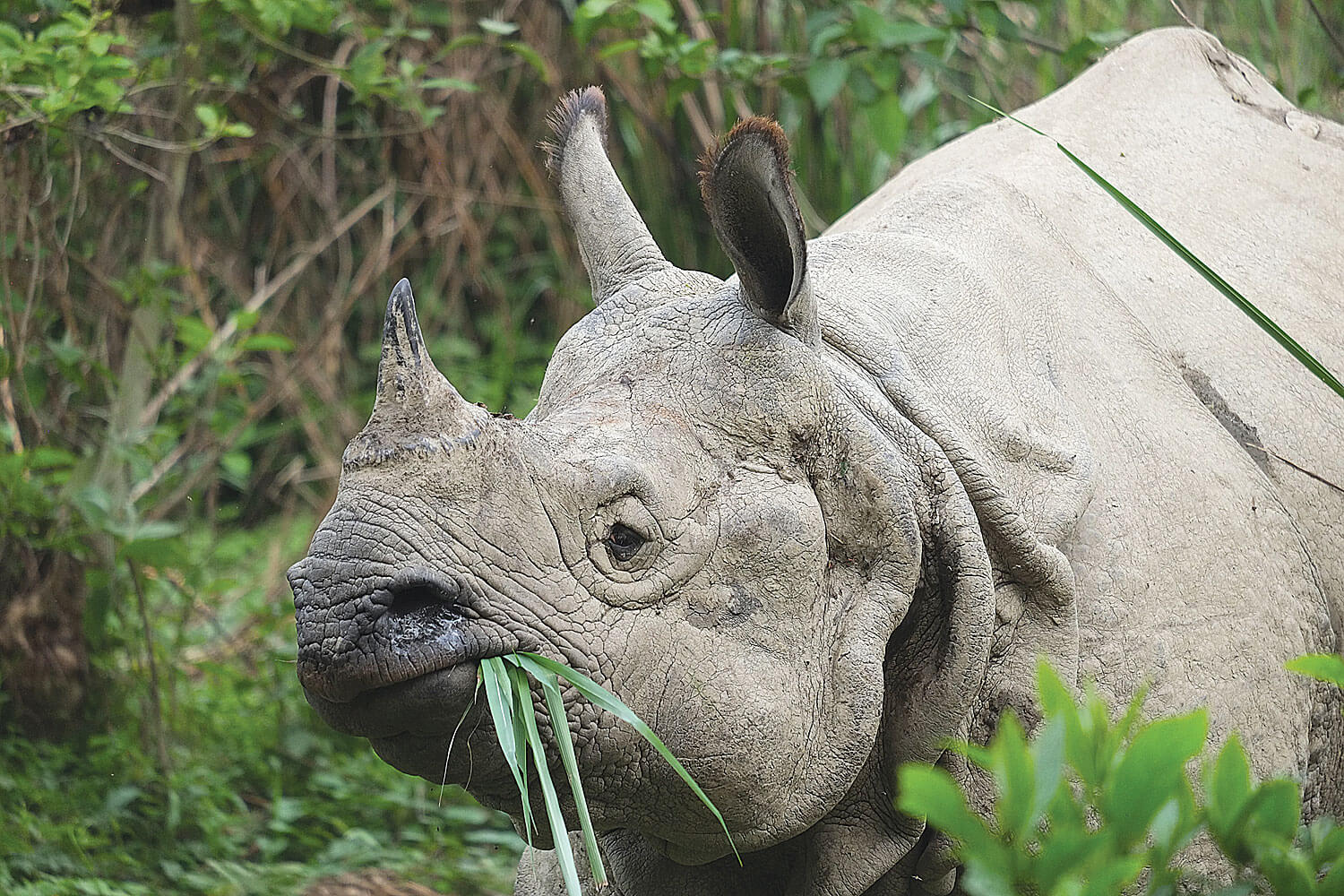
Nepal is the first tiger-range country to double the number of the endangered big cats in its reserves, and has marked five successive years of zero rhino poaching -- setting a model for conservation, especially as a country with limited resources.
Yet at the same time Nepal has become a thriving transit hub for trafficked endangered species from India, and even Africa, to China. Although the current Covid-19 epidemic is expected to temporarily reduce the market for wildlife (see adjoining piece), improved trans-Himalayan connectivity between Nepal and China could increase smuggling of tiger and rhino body parts and pangolin scales.
Read also: Coronavirus outbreak may curb wildlife trafficking, Sonia Awale
The value of wildlife trade worldwide is estimated at $20 billion a year, making it an incredibly lucrative illicit business, behind only narcotics, human trafficking, and the arms trade. Poverty is often thought to be the main reason behind people’s involvement in this trade. But is it?
“There is a common assumption that illegal wildlife trafficking is linked to poverty, but we cannot generalise,” explained Nepali conservationist Kumar Paudel, currently a postgraduate student at the University of Cambridge. “What is the extent of the poverty that leads to wildlife poaching? Are they poaching to provide the next meal for their families, or do they not have enough money to afford a car or a bungalow?”
Three years ago, Paudel interviewed 116 individuals serving time in jails across Nepal for trafficking in wildlife, and he has published some of his findings in a recent paper in the journal Conservation Science and Practice. He asked interviewees about their trade practices, economic conditions and motivations.
While 56% percent were living below the World Bank poverty line, Poudel found that for many others, poaching was a means not of survival but rather of increasing disposable income. Comfortably-off people and even university graduates were involved in illegal hunting.