
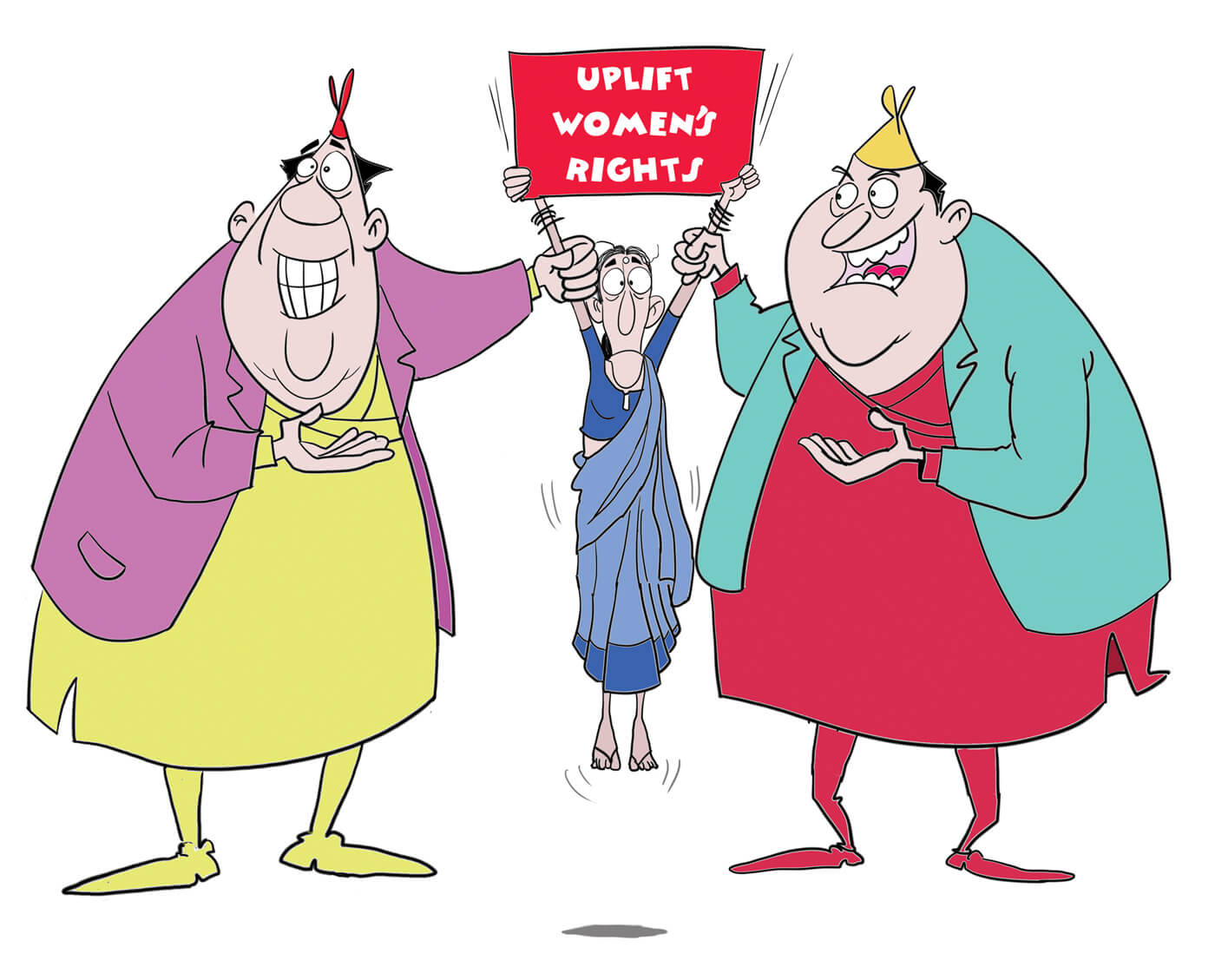
While a debate about equal citizenship rights for women raged in Parliament this week, single women who survived the earthquake are quietly and bravely struggling against deep-rooted patriarchy to rebuild homes and carrying on with their lives.
On International Women’s Day, this illustration by Diwakar Chhetri shows where Nepali women are today: their responsibilities have increased and so have their capacities and achievements. But they continue to face impediments from all sides, most glaringly from the state.
Read also:
Staying alive, Sewa Bhattarai
Nepal's better halves, Anil Chitrakar
Since the mid-1990s female literacy in Nepal has doubled, and this has brought far-reaching changes that have ultimately empowered women. Employment and property ownership rates, and maternal and neonatal health have dramatically improved – all because women were more aware about health and rights.
There has also been progress in politics, the economy, and sports. Not so long ago, the Chief Justice, Speaker of the Parliament and President of Nepal were all women and at the same time. We have also had one of the most inclusive parliaments in history in terms of gender. Most municipalities in Nepal have proactive female deputy mayors.
Read also:
The house for the Nepali family, Sewa Bhattarai
Making gods for a living, Sonia Awale
Surviving the aftermath, Sonam Choeyki Lama
Staying positive, Sewa Bhattarai
Nepal’s National Women Cricket team returned home this week after clinching second position in the World Cup Asia Region Qualifier in Thailand. Not long ago, our women’s blind cricket team won the First International Women’s Blind Cricket Series in Pakistan. Nepal’s women football team was second runner-up at the Gold Cup in India last month.
The outflow of men for overseas work has had many consequences, and the most notable is the feminisation of rural Nepal. With the men away, women have taken charge both in their homes and communities. They have decision making power in the management of schools and health posts, in community forestry and irrigation. It won’t be too far-fetched to say that much of the credit for ground-level development, despite the absence of local government for 20 years, goes to women. And now that we have local governments it is women who are standing up to corrupt male counterparts in some municipalities.