On Friday, it will be four months since Nepal closed the country down to prevent the spread of SARS-CoV-2, the virus strain that causes COVID-19. Of the 40 who have died of the infection in Nepal, two are children below 5.
But many more children have died during the four months of lockdown compared to the same period last year because of lack of access to health care due to the restriction on mobility, interrupted vaccination campaigns and the lack of medicines.
However, the coronavirus grabs all the headlines. Mortality due to non-COVID-19 causes does not make the news – even though it is clear that a lockdown enforced to control one disease has caused far more deaths from other prevalent diseases, and threatens to undermine Nepal’s progress in infant and child survival over the past four decades.
“The COVID-19 crisis and lockdown have pushed many families into poverty, many have lost their sources of income, leading to malnourishment among children,” says Jhalak Gautam of the Child Health Division at the Health Ministry. “Increased malnutrition means children are more susceptible not only to COVID-19 but to many other infectious diseases such as measles and diphtheria.”
Under-5 child mortality rate in Nepal had declined substantially from 271 deaths per 1,000 live births in 1969 to 32 in 2018. Government figures show that since 17 July 2018-16 July 2019, a total of 1,357 children under 5 died of various infectious diseases all over the country. Preliminary figures for the same period 2019-2020 is 1,263 – even though only 78% of the data has been collected.
Initial government figures also show that a total of 204 children under 5 have died across the country during the lockdown between 14 March-14 June. This number was at a much lower 151 during the same period last year.
This data clearly show that the total child death numbers collected by Female Health Care Volunteers is higher this year — meaning they died at home. The number of those who have died at hospital in the same three months this year is lower than last year probably because parents are not taking children to hospital when they are sick during the lockdown.
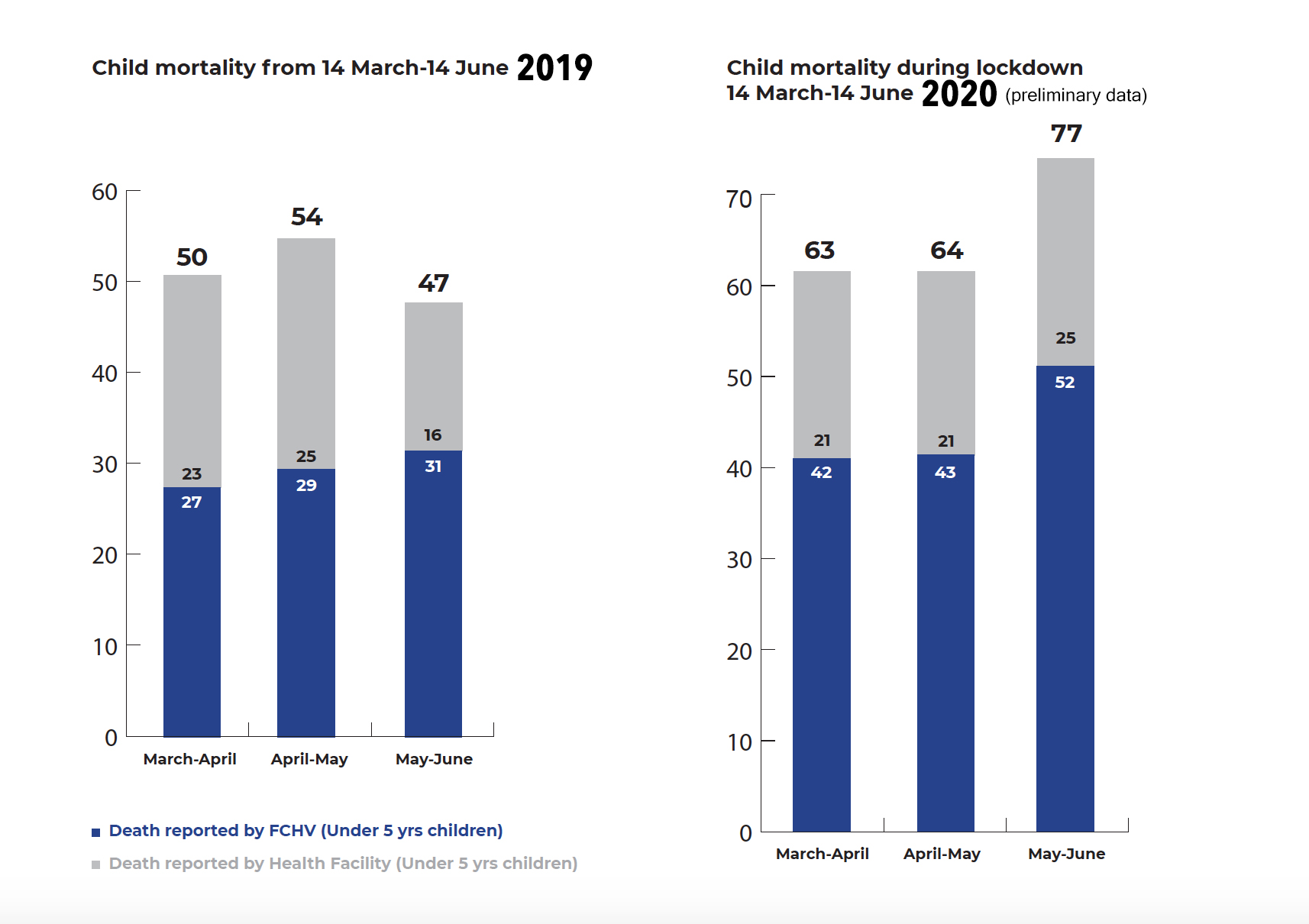
An expert at the Health Information Management System says when all the data for this year comes in, it is bound to be much higher than last year. This means the lockdown has pushed Nepal back in meeting its health targets under the United Nations’ SDGs (Sustainable Development Goals).
Under the SDG target, Nepal is supposed to bring child mortality down further to 25 deaths per 1,000 live births by 2030. Persistent childhood malnutrition is a major reason for infant and child mortality remaining high despite dramatic progress in the 1990s. Figures for stunting, wasting and anaemia in Nepal have plateaued in the last decade Now, the lockdown has added to the challenge.
Says Elke Wisch, UNICEF Representative to Nepal: “Progress made on children’s nutrition in the last decade is at risk of being reversed as rising numbers of children are facing malnutrition due to loss of household income and resulting food insecurity. The social and economic loss for Nepal resulting from the deterioration in children’s nutrition status will be felt long after the COVID 19 crisis is over.”
The lockdown has also disrupted vaccination campaigns across the country, leading to measles outbreaks in Dhading and Gorkha in April. Although regular immunisation services have now been restored in health facilities in all 77 districts, parents have been unable to take their children for shots because of restrictions on transportation and also because of the fear of COVID-19 transmission in health posts.