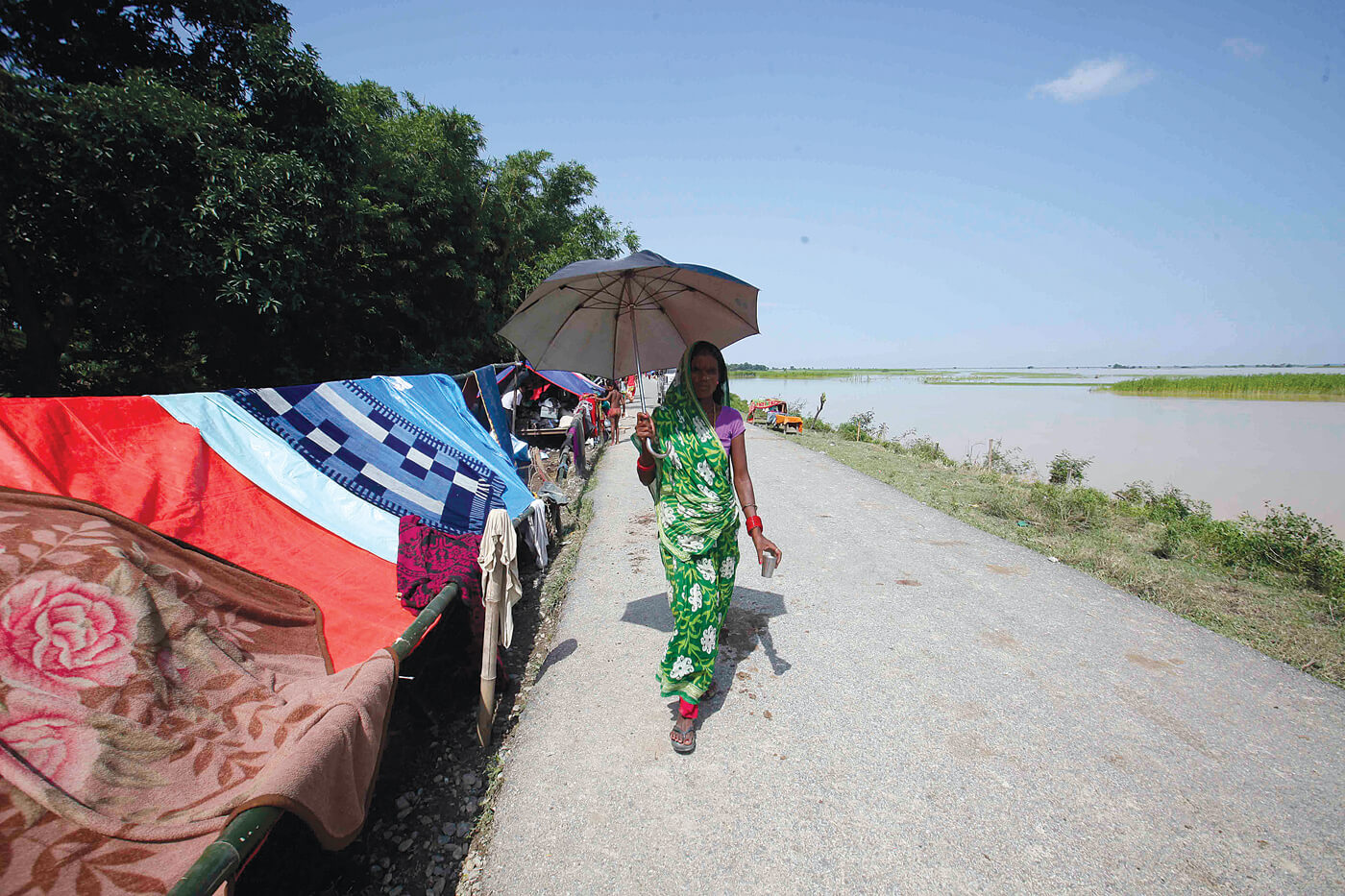
With the advent of the monsoon, we will be flooded with stories of floods, landslides and other water-induced ‘natural disasters’ as they ‘wreak havoc’ throughout the land. Floods are natural, disasters are not.
Nepal has nine dry months and three months in which we have too much water. In the rainy season, rivers used to spread along the floodplains, dissipating the force of the water. Nepalis traditionally knew better than to locate settlements on river banks. In the agrarian Tarai, farmers had learnt to live with floods and welcomed the annual replenishment of farms with vital, water-borne nutrients.
To be sure, there were years when natural buffers would be overwhelmed and rivers burst their banks, eroding valuable farmlands as they changed course. But bad planning means that we have turned a predictable annual occurrence into a regular calamity.
Read also:
Nepal Tarai learns from past floods, Sewa Bhattarai
Only half prepared, Sewa Bhattarai
More than half of Nepal’s population now lives in the Tarai, and human settlements have encroached on what used to be floodplains.
Deforestation of the fragile Chure hills has increased sediment loads of seasonal rivers, causing them to flow through villages and farms. A river will find its own way to the sea no matter what we do to block its path.
It is true that floods are getting more destructive, but not because there is more rain. Our attempts to control floods are making them worse.
Levees built to ‘train’ rivers end up constricting their flows, embankments often act as dams blocking the natural course and submerging huge tracts of farmlands. Roads have been built on elevated land to prevent them from flooding, but they just make the floods worse.
Many roads just on the other side of the border in India have inadequate drainage and create vast reservoirs on the Nepal side every year. Meanwhile, tv news in Bihar and Uttar Pradesh blames Nepal for releasing water from its dams — not bothering to explain that Nepal has only one reservoir and the sluice gates of the three border barrages are under Indian management.
After every disaster like Sunsari (2008), Bardia and Surkhet (2014), Saptari and Rautahat (2017) and Bhaktapur last year, there is a flood of recrimination, blaming nature and bemoaning our lack of preparedness. Rescue agencies are usually at the scene quickly, but are overwhelmed by the sheer scale of the disaster. Relief and rehabilitation is mired in bureaucracy and corruption, with villagers still waiting for help decades later. Poverty-stricken farmers are impoverished even more, and floods force many to migrate.
Read also:
Fleeing flash food, Gopen Rai
Once the monsoon tapers off in September, we will forget about floods for another year. Instead of taking preventive measures to improve drainage and poorly designed infrastructure that block the natural flow of rivers, it will be back to business as usual.