
Climate mitigation targets are being rolled back worldwide, and time is running out for saving the Himalayan icecap.
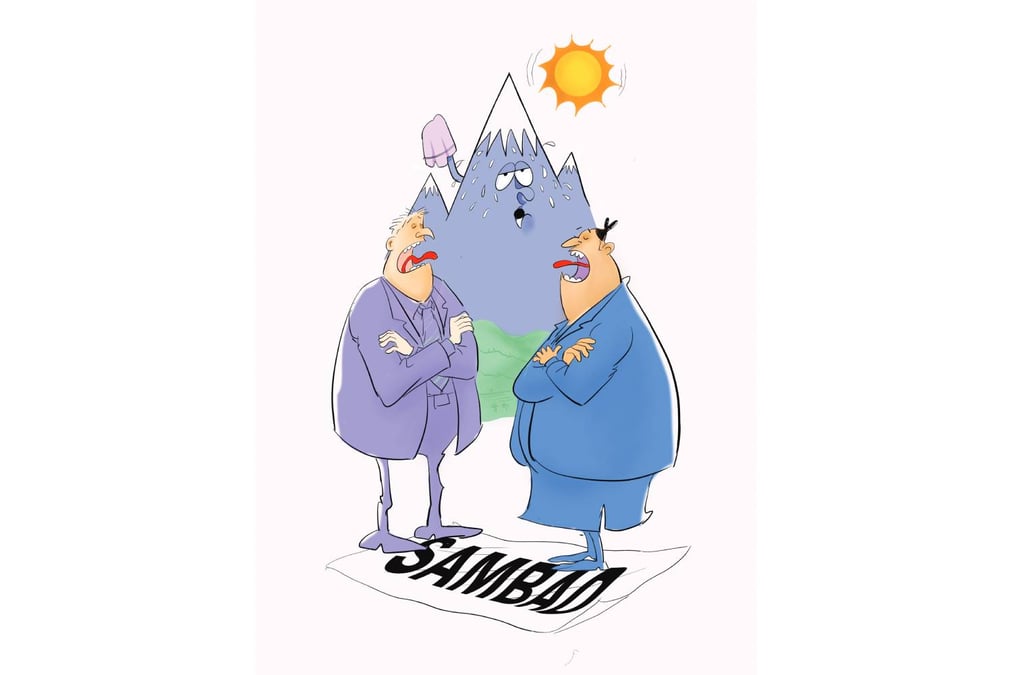
That was the unsaid message of the three-day Sagarmatha Sambaad international climate conference hosted by the Nepal government in Kathmandu this week.
The gathering ended with a 25-point Call For Action, but drew criticism for being yet another talk shop, regurgitating jargon and deflecting blame for lack of seriousness in reducing emissions, adapting to weather extremes in the region, and failure in cross border cooperation.
“The event put Nepal and Everest on the global climate map and had geopolitical benefits for Nepal,” says climate policy analyst Arjun Dhakal. “But it was a missed opportunity for Nepal to strongly push climate-smart infrastructure, transboundary early warning systems and highland research.”
Nepal unveiled its Nationally Determined Contributions (NDC) 3.0 with mitigation targets for 2030 and 2035, and its first Biennial Transparency Report with emissions data from 1994 to 2022 and projections up to 2050.
Although Nepal has met previous targets for forest cover (46% of area) and made progress in promoting electric transport, fossil fuel use is growing. The Third NDC targets a 17.1% reduction in net greenhouse gas emissions and 26.8% by 2035. This could have a price tag of $73.74 billion — most of it from international climate finance at a time when money for it is drying up.
Nepal also hopes to increase electricity generation to 28,500MW by 2035, up the sales of electric public vehicles to 90%, and operate at least 100km of integrated electric bus, trolley and light rail transit in Kathmandu Valley, and build 300km of electric train network.
Read also: The public in public transport, Sonia Awale
These are lofty promises at a time when the government's next budget has a huge revenue shortfall, and the Ministry of Finance is expected to increase taxes on battery-operated vehicles which have seen a huge increase due to past rebates.
“Climate change has become political, big emitters aren’t even respecting global targets. So it is very unlikely they are listening to us,” says water expert Madhukar Upadhyay. “Nepal just does not have the political stature to push global commitments. But we could have narrowed the focus and taken the lead on regional action.”
The World Meteorological Organisation (WMO) has predicted above-normal rainfall and temperatures for South Asia for monsoon 2025. Pre-monsoon rains this year are above normal and could be a sign of things to come.