
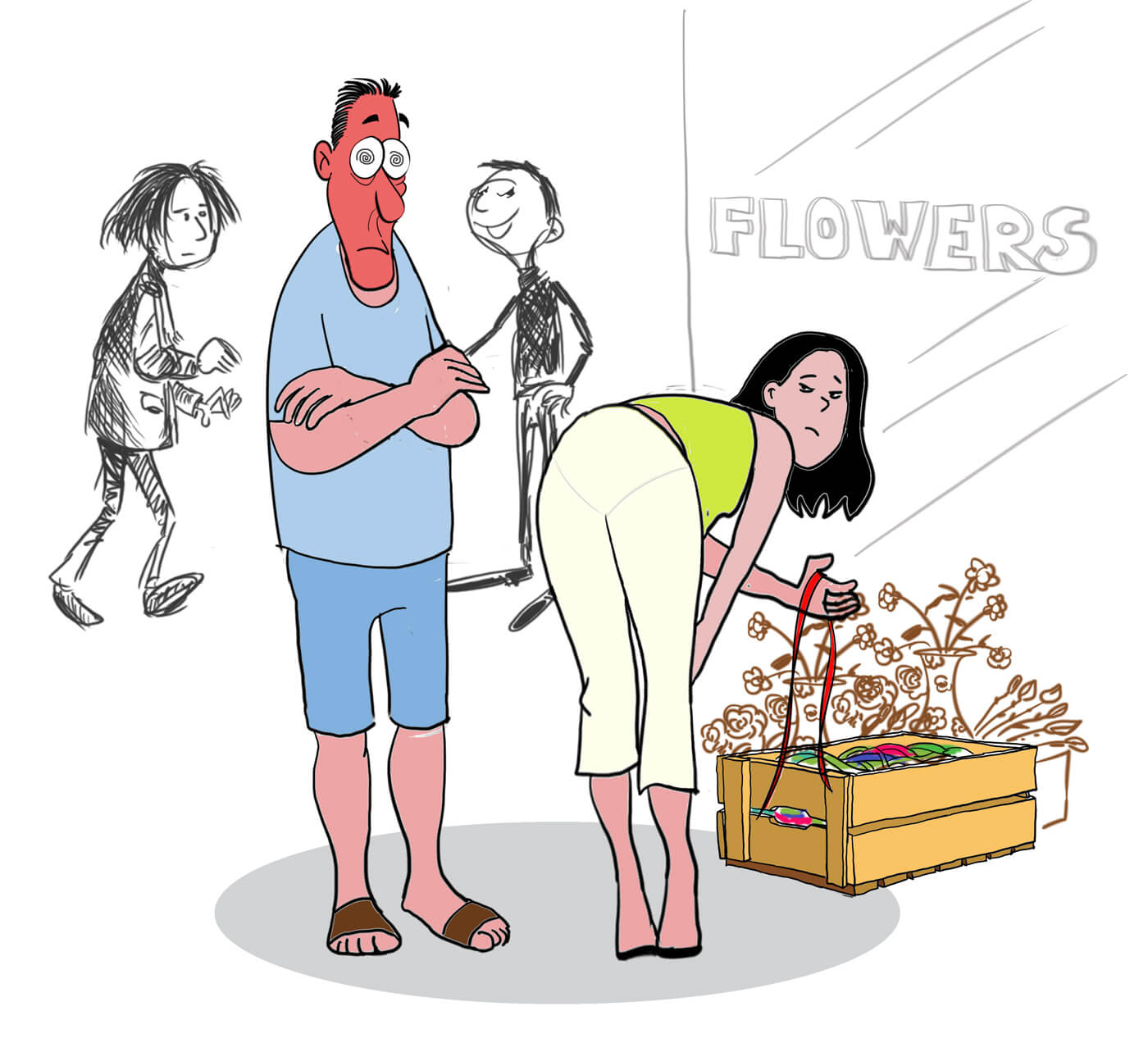
Buying a bouquet for a friend’s wedding the other day, I got really involved in the process of choosing the flowers, arranging the blooms and packaging them up. So much so, I was bent over and stooping about the little flower shop to find the right coloured ribbons, paper and paraphernalia.
That’s when my husband noticed my clothes.
Light coloured, because I dressed to cope with the stifling summer heat of the valley, traces of my undies showed through when I leaned down to scrutinise some ribbons. He noticed. And according to him, others noticed too.
Should I feel ashamed that they did? Should I wear the burden of having males stare at my bottom when I happen to bend over, or stare at me when I walk? It’s not often I’m scrounging about a small shop exposing my bum to the world. When I walk, the pants don’t pull tight enough to look ‘indecent’ or ‘vulgar’.
In a country where exposed bellies under the drapes of saris are normative, or push-up bustiers and sexy, diaphanous tailoring are to be seen at any given wedding or celebratory event across the city, why am I made to feel like I’ve committed a great sin by wearing my kind of fuss-free, breezy fashion that happens to be in a light colour and fabric? Why should my girlfriends feel intimidated by people staring at them when they wear skirts or shorts cut above the knees?
It is no wonder to me that the abuse of women and girls in Nepal, and in the rest of the subcontinent, is prevalent.
Read also:
Corrosive conduct, Editorial
Four-fold increase in reported rape in 10 years, Sewa Bhattarai
#TheyToo, Sewa Bhattarai
If women are yoked with the responsibility of presenting ourselves in ways that do not offend the male or conservative gaze, where would the blame lie should such offence be taken, I would ask. Also, should we start examining the dynamics of treating women and girls in ways that are harmful to their well-being, in the name of tradition and religion and along class and caste strata?