

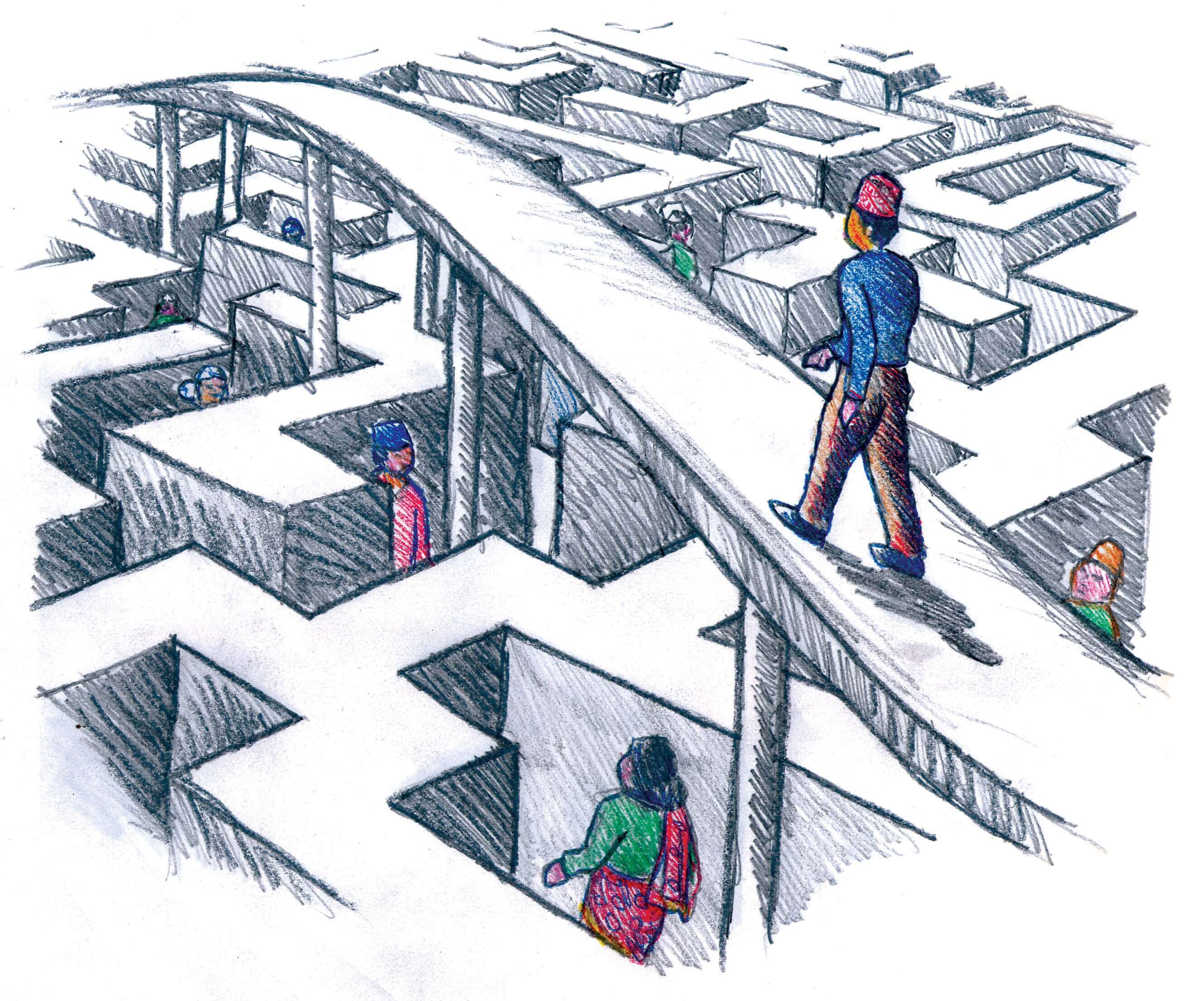
Till only two centuries ago almost every human being lived and worked from home. The industrial revolution brought factories, then offices forced city-dwellers to commute to work and back.
But with the Information Age, smart devices in the hands of smart people means we can once again work from home. Going to an office will and should become irrelevant. Home workers will also not have to work five days a week. They will be so productive, three days will be enough.
That is probably what will also reduce traffic jams, improve the air quality and as we become healthier, we will once again live longer. Where you are physically located will become irrelevant and the notion of going abroad will be limited to leisure, adventure and disposable incomes. But even here, we have seen a 15% drop in domestic air travel in northern Europe as awareness of the extent of the impact of aviation on the climate crisis becomes clear.
Read also: Let's listen to Nepal's young changemakers, Anil Chitrakar
The transformation in the way we work is going to have huge implication for the designs of homes, neighbourhoods and cities. The key word is ‘work’. There still are many who are looking for a jagir salaried job in the civil service or private companies. Perception and understanding of work and jagir will be very different depending on who you ask.
Some still seek a ten to five jagir in an office that pays a fixed income each month, comes with a lifelong pension, and takes a little bit of chakari to keep bosses and political masters happy. Performance and delivery of output are not really an issue, and the worst thing that can happen is you get moved to a different office or to some remote area of the country away from your family and the schools your children attend.
Many are seeking a jagir, while others seek work. From construction to managing a restaurant, from driving a taxi or tipper truck to growing crops and vegetables, there are many who work.