There was a time until recently when we wrote editorials in this space about how the global digital divide was mirrored within Nepal. Just like the haves and have-nots, we said Nepal had the ‘knows’ and ‘know-nots’, because access to the internet here was so skewed.
How fast things have changed. Till 2012, we were reporting that there were 1.4 million Nepalis on Facebook. Today the figure is nearing 8.5 million. The number of Twitter users is much lower, but it has a following among the intelligentsia, media and political influencers, which magnifies its impact.
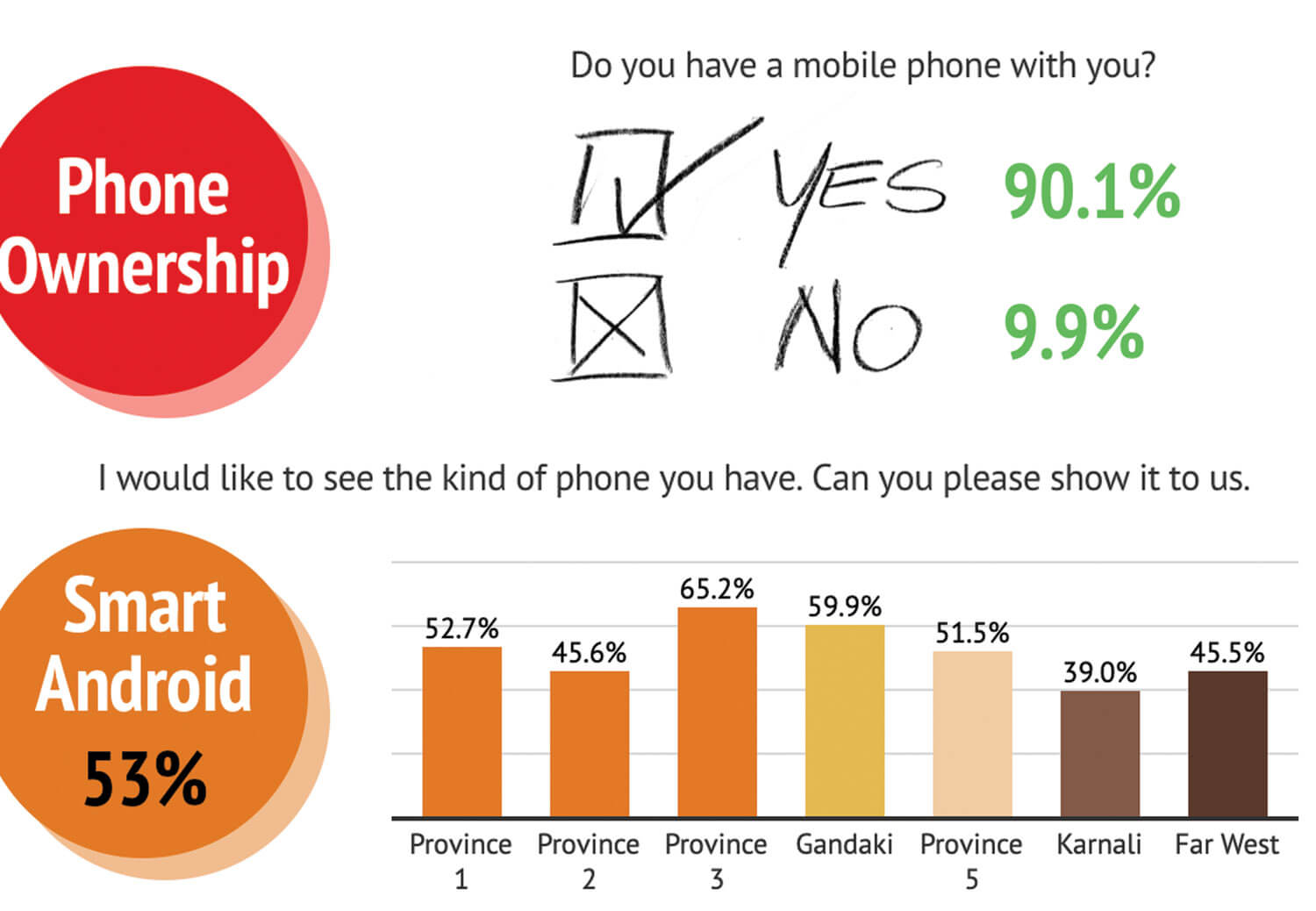
In April, Nepali Times printed the results of a Sharecast Initiative survey that showed:
- 96% of Nepali households own a mobile
- 90% of individuals own a mobile
- Half the mobile users had smartphones
- 18% used laptops, desktops or tablets at home
- Among the 35% who used the internet, 98% said they use mobile phones to get online
- 75% used mobile data to access the internet.
Read also:
So, you want to quit Facebook?, Reeti KC
Nepal’s new digital landscape, Sonia Awale
As our review of the survey in this edition (page 15) shows, the shift of eyeballs to digital media is going to have a profound impact on the way Nepalis communicate with each other, the way Nepal is governed and how Nepali society functions.While the legacy press is still strong and influential, and people do not fully trust information on the Net, the window for print is narrowing. As elsewhere, it is inevitable that the online editions of the mainstream press, digital news portals and YouTube channels are going to be the main sources of news. Print media will have to re-invent its revenue model, or perish.
Internet viewing patterns in Nepal and other parts of the region show increasing dominance of entertainment content. Facebook and social media addiction is becoming a problem, reducing the attention span of readers, exposing them to click bait, fake news and rumours.
As the recent case involving Rabi Lamichhane — as well as protests against heritage destruction, violence against women and corruption — shows, social media content is now driving mainstream media content, setting the agenda for coverage and priority accorded to events, personalities and issues.
Not all of this is improper, damaging or dangerous. The internet has democratised information flow, levelled the playing field, and in many cases turned citizens into actors and content providers themselves. The cybersphere has become the new Nepali public sphere, chautari and our own global village, where the medium is the message.
Read also:
Digital Detox, Nepali Times
Nepalis are drifting to digital media, Madhu Acharya and Bhumiraj Chapagain
People like Kulman Ghising of the Nepal Electricity Authority, Vijay Lama of Nepal Airlines, and Sanduk Ruit of Tilganga have been propelled to national stardom through social media magnification. They are seen by the public at large as direct antitheses of greedy and corrupt politicians.No wonder, then, that the greedy and corrupt feel threatened by these personalities. In the battle between populism and popularity, these new heroes expose the hopeless inadequacies of political figures because of their integrity and selfless devotion to public welfare. When they become a political threat, we have seen backlash from the rulers.