Till about 200 years ago China and India were the world’s largest economies, and that helped Kathmandu prosper as an entrepôt between the two. We have now come full circle.
China and India are ascendant once more, and the two giant neighbours can be the locomotives to pull Nepal along if we play our cards right.
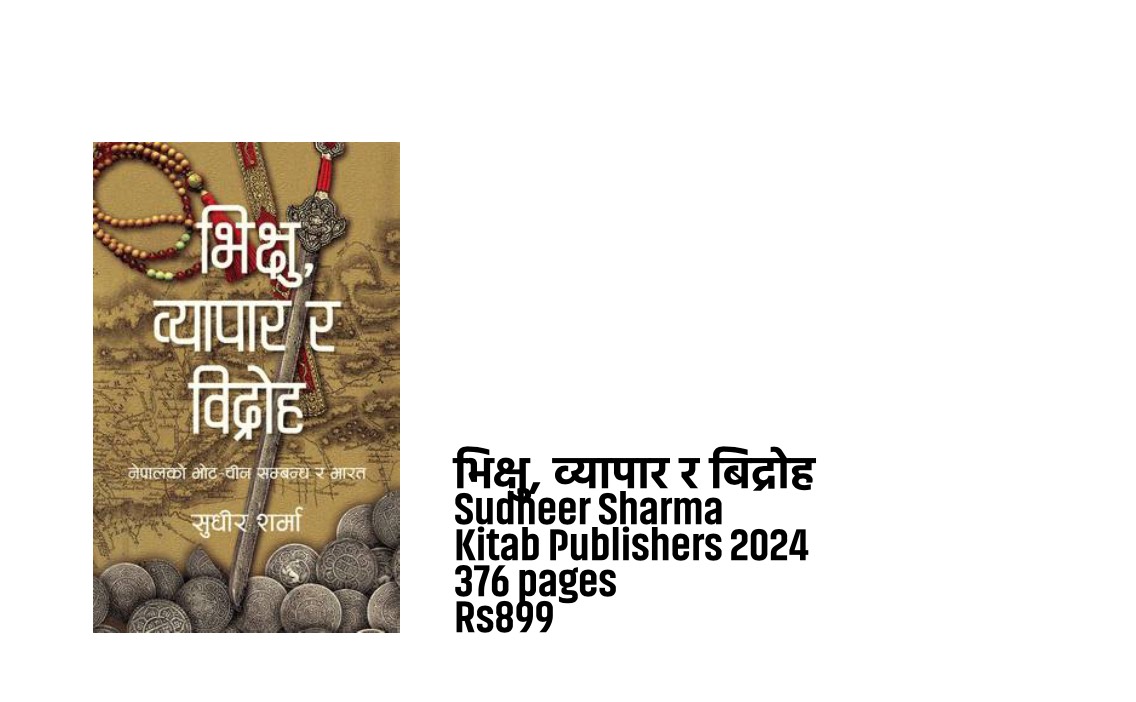
That is the message in former Kantipur editor Sudheer Sharma’s omnibus edition of two books that explore the historical and geopolitical dimensions of Nepal’s relations with China.
The two Nepali language books, भिक्षु, व्यापार र बिद्रोह (Monks, Trade and Rebellion) and हिमालपारिको हुरी (Trans-Himalayan Hurricane) follow Sharma’s previous work प्रयोगशाला (Laboratory) which looked mainly at Nepal-India relations and was translated into English as The Nepal Nexus.
The first book is predominantly about Kathmandu’s historical links with Lhasa, and by extension Beijing. Vajrayana Buddhism played a significant role in bringing the two sides of the Himalaya together, allowing social and trade relations to thrive.
Princess Bhrikuti, King Narendra Dev and Arniko were prominent historical figures, but thousands of lesser known monks, traders, and travellers also played their part in cementing Kathmandu-Lhasa ties. These connections were so strong that they endured three wars that the Gorkha Kingdom and Tibet fought against each other in which Chinese emperors sent military help to fight off the Nepalis.
Although Nepal’s historic connections with Tibet waned after the Chinese annexation of the plateau in the 1950s, it is on that foundation that present day Nepal-China relations are built.
Till today, Nepal is the only country with a consulate in Lhasa, and the only international flights from Lhasa are to Kathmandu. But as Sharma notes, even back then, Nepal’s proximity with northern India figured importantly in its socio-economic and cultural connections with Tibet.
Nepal was the corridor for the exchange of trade and faith between the Ganga plains and the Tibetan plateau. The road between Patna and Potala, Banaras and Beijing passed through Kathmandu Valley. Sharma traces this socio-political landscape to explain how it went on to shape the country’s modern day relations with the neighbours.
There were 2,000 Buddhist monks in Nepal during the reign of Lichhavi king Amshuverma, and Arniko established himself in the court of Kubulai Khan and took eight years to build the massive White Dagoba in Beijing.
Read also: The life and times of Arniko, Sewa Bhattarai
While Mahayana Buddhism spread from India, through Nepal to China and beyond, it was Communism that later came from China to Nepal.
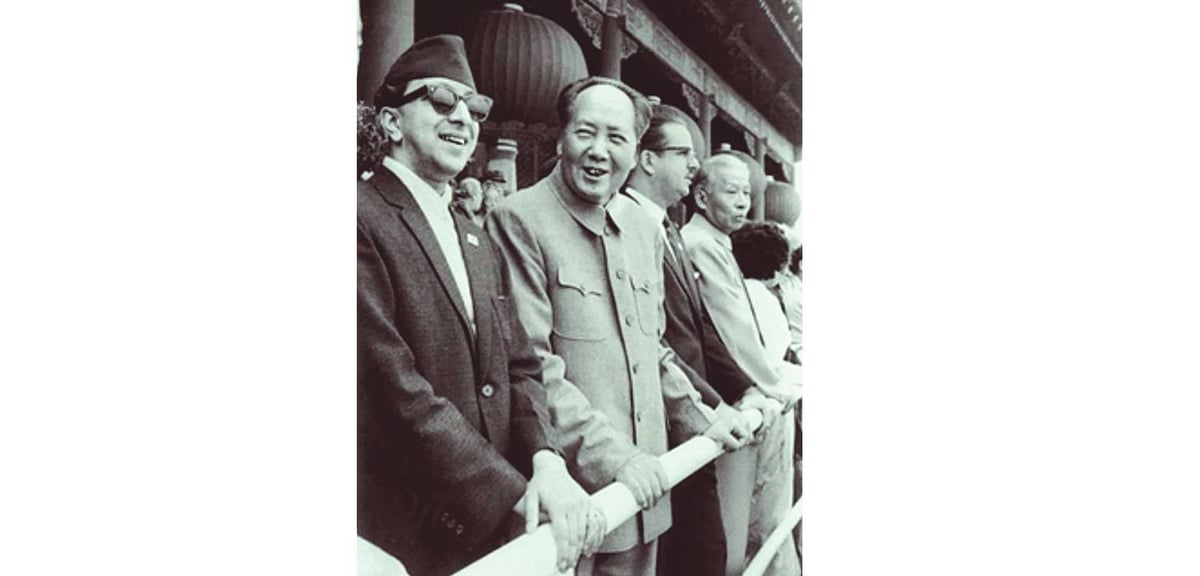
King Mahendra had great geopolitical savvy and navigated the complicated geopolitics of the Cold War to cultivate relations with both Nehru and Mao, while keeping both at arms length.
Mahendra wrested aid to build infrastructure like the Kodari and Prithvi Highways from China, but also from India, the Soviet Union and the United States. In fact Nepal was only the eighth non-Communist country to receive foreign aid during Mao’s China.