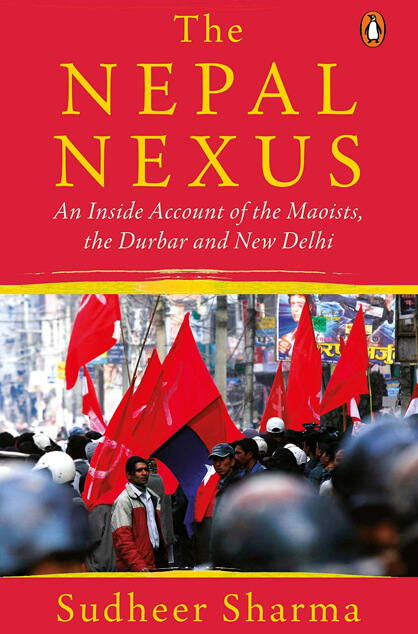
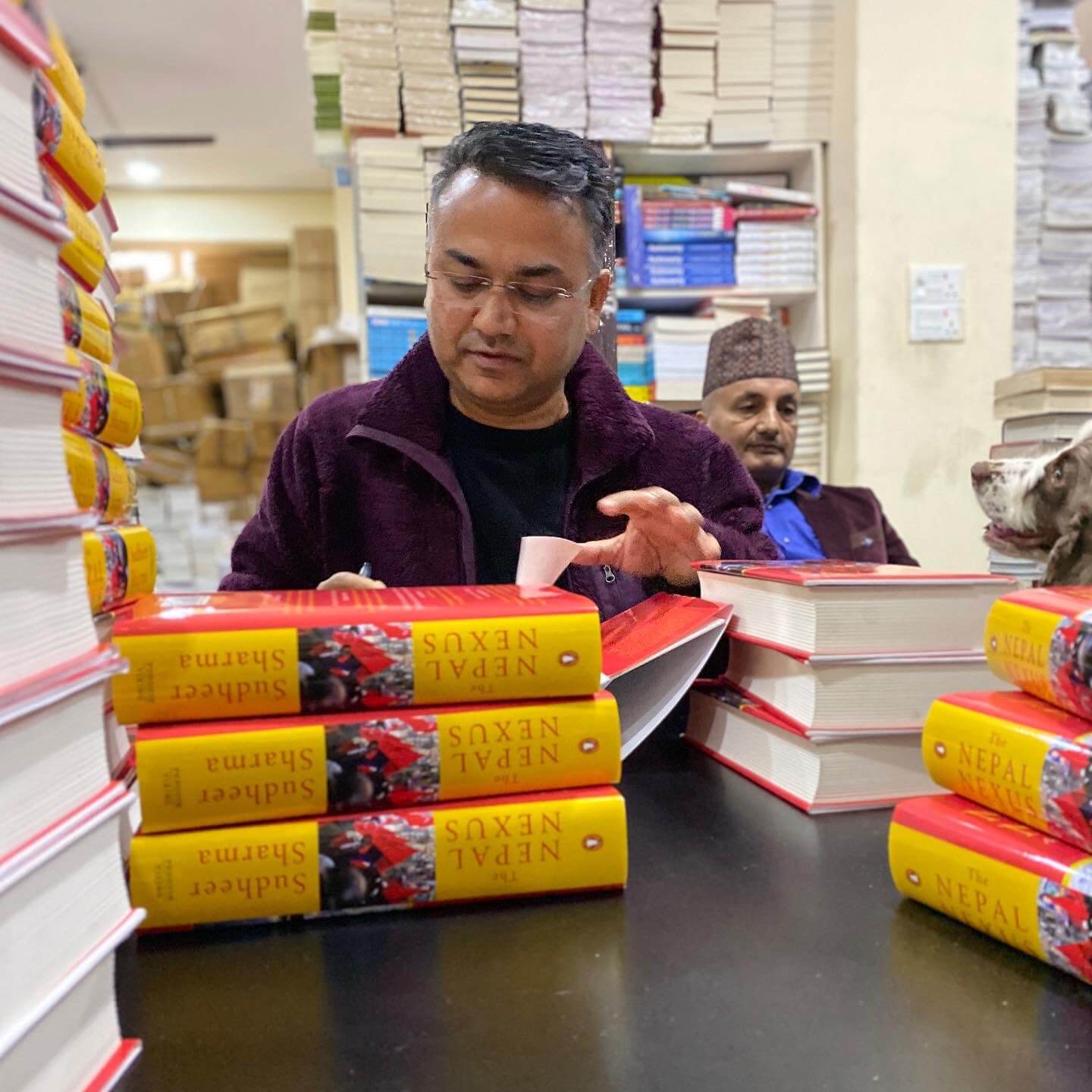
Nepal Nexus, the English translation and updated version of the 2013 bestseller Prayogshala by editor Sudheer Sharma, offers readers a vivid account of Nepal’s ten-year conflict, the 2006 people’s movement, the fragile transition that followed, to the Maoists’ subsequent rise to power. The English version was translated by Sanjaya Dhakal for Penguin India and released last year.
Sharma, who was and is once more the editor of Kantipur, begins with a personal account of his experience as a war reporter during the time of the state-Maoist conflict. Although he describes the book as an inside account of the Communist Party of Nepal (Maoist), the reader finds it more of an account of Prachanda’s rise to power, and only tangentially of the party he led.
Sharma has a soft corner for Prachanda, and does not conceal his sympathies for the erstwhile revolutionaries. ‘It is my view that the major credit for restructuring the state should go to the Maoists,’ may come across to many as giving too much credit to the CPN(M) for what was essentially a violent shortcut to power. To be fair, the journalist in Sharma tries to be objective and balance his views with those of others with explanations, experiences, and interviews. (See box, below)
The translation may not exactly be a page-turner, but has gripping revelations about the dynamics between the palace, Parliament, the (Royal) Nepal Army, Nepal Police and the Maoists between 1996 and 2006. The account of just how much India’s intelligence agency RAW was micro-managing Nepali politics through the conflict, during and after the 2001 royal palace massacre gives new insight into the cloak and dagger world of spooks.
One of the highlights of Sharma’s book is the treatment of Nepal’s relations with its neighbours, in particular India’s role in helping the Maoists join mainstream politics – apparently as a way to weaken a nationalist monarchy as well as to show India’s own Maoist revolutionaries that there was an electoral path to power.
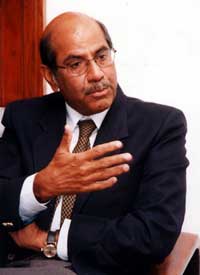
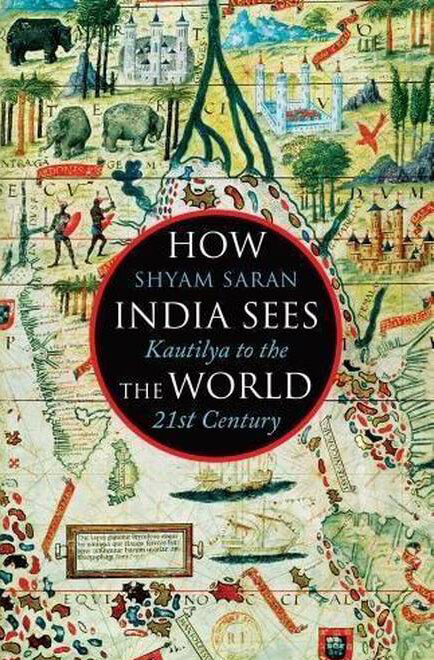
Shyam Saran, who was Indian ambassador to Nepal (2002-2004) and went on to become foreign secretary (2004-2006), looks at the broader question of India’s place in the world in his book. There are sections in How India Sees the World that deal with the same historical period as Nepal Nexus, but from New Delhi’s perspective. Saran came as envoy after the royal massacre and witnessed Gyanendra’s four years of steady power consolidation. By 2005, the king was in open confrontation with New Delhi, and Saran writes that India's ‘twin pillar’ doctrine to support constitutional monarchy and parliamentary democracy became untenable, and Delhi turned to the seven party alliance with the Maoists (nicknamed ‘SPAM’).
Almost every Nepali is an expert on relations with India, and social media has profuse conspiracy theories about Big Brother. Many writers and diplomats have dissected Indo-Nepal relations during the turbulent period from 1990-2017. For his part, Sharma tries to provide evidence of India’s constant meddling in Nepal’s internal affairs – right from the 1950 Treaty to the 2015 blockade.
Sections of Saran’s book that deal with Nepal see things quite differently, of course, and that is to be expected. He has an opposite take on New Delhi’s behind-the-scenes dealings in Kathmandu. In the chapter ‘India and Nepal: A Relationship of Paradox’, Saran describes the souring of the relations between the neighbours after the promulgation of Nepal’s Constitution and the economic blockade that followed in 2015.
Read Also: Campaigning in Nepal, Editorial
Saran defends India’s handling of that tumultuous period, absolving South Block and the PMO of all blame for allowing bilateral relations, which Prime Minister Modi had normalised with his 2014 visit to Kathmandu, to disintegrate. The chapter may as well have been titled: ‘How the Indian State Wrecked Relations with Nepal’.
Saran describes how it was India that steered the Maoists into above-ground politics in 2006, introduced secularism into Nepal’s new constitution, and how it opposed that same constitution for the sake of the rights of Madhesis. Ironies of ironies: regime change in India meant the BJP is no longer a big fan of Nepal’s secular constitution.
Sudheer Sharma’s analysis of the Indian blockade calls a spade a spade: India was angry about not being consulted about the new Madhes province which did not include five contentious provinces: Jhapa, Morang, Sunsari in the east and Kanchanpur, Kailali in the western Tarai. ‘After it refused to entertain India’s counsel and coercion, many in Nepal thought India decided it was time to teach a lesson to its small neighbour … with the ultimate weapon of a border blockade,’ writes Sharma, providing examples of covert Indian involvement in supporting the Madhes agitation.
Read Also: Eminently beneficial for India and Nepal, Ajit Baral
Shyam Saran sees it differently: ‘Supplies from India to Nepal were blocked by the Madhesis in the border leading to hostile sentiments among Nepalis.’ Saran sticks with the story that India supported the rights of Madhesis in the writing of the 2015 Constitution. He writes, rather condescendingly, that India has always been generous towards Nepal and that, despite all the help, Nepalis always misunderstood its large neighbour.
Interestingly, Shyam Saran himself reviewed Sudheer Sharma’s Nepal Nexus in the India’s Business Standard newspaper. He wrote: ‘The book creates the impression that the Madhesi issue is somehow created by India and that it flows from the ethnic links of the people of the Nepal Tarai and those living across the border in UP and Bihar. However, there are several million Indian citizens of Nepali origin especially in Uttarakhand, West Bengal and Assam, and they are all from the hill districts of Nepal. Mr Sharma could have at least acknowledged some of these additional and significant dimensions of the relationship between the two countries.’