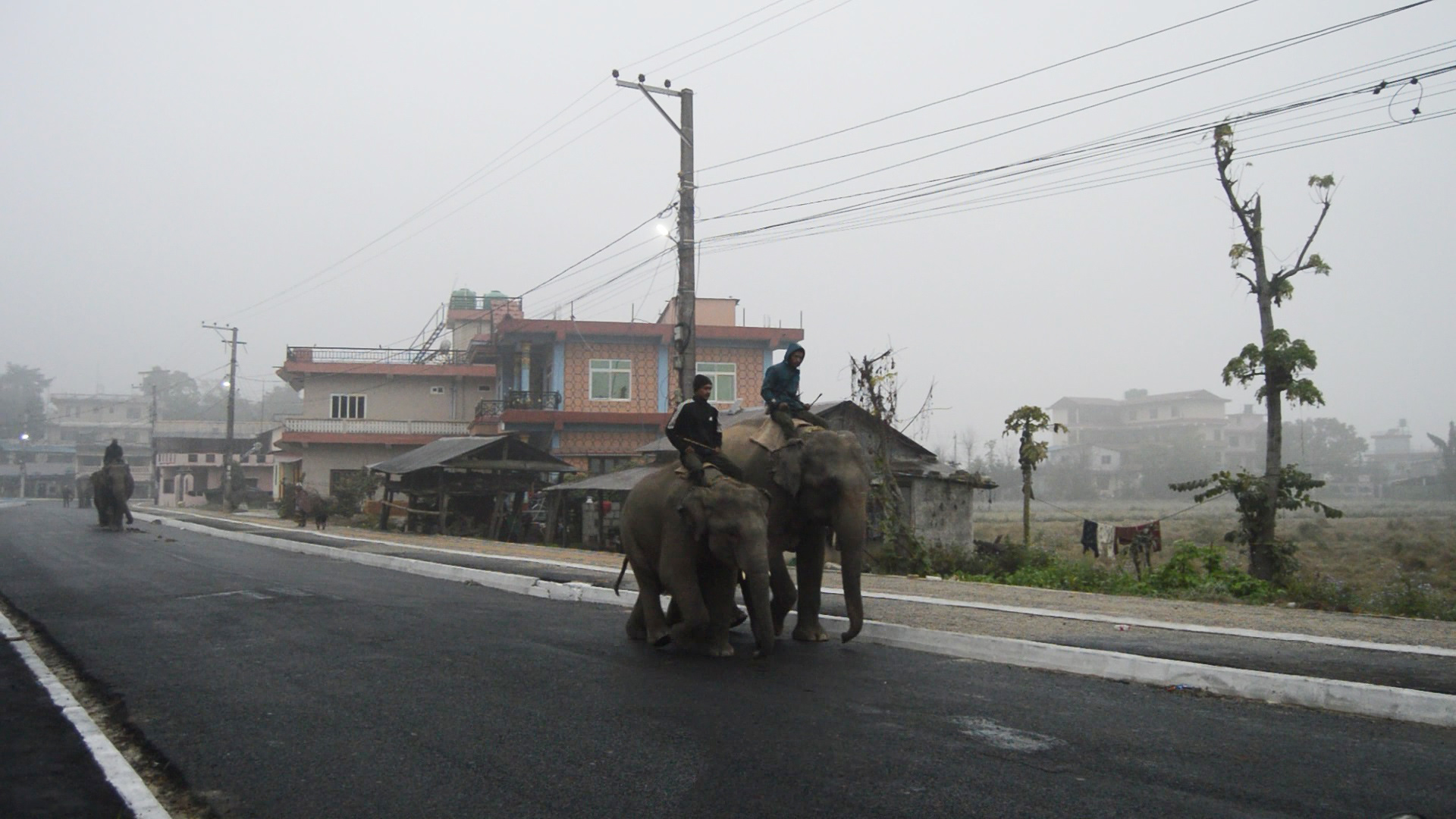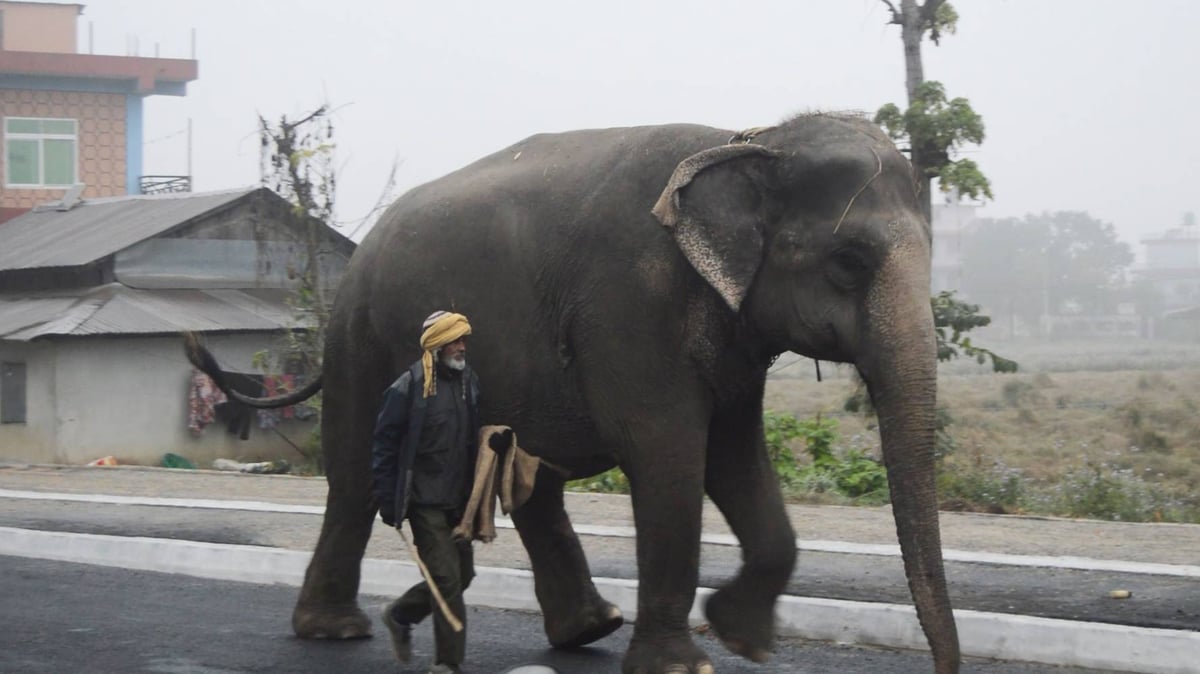
Om Rijal has been training and caring for elephants for years, but unable to keep up with the high cost of maintenance, he now wants to sell them. He owns nine elephants and employs 13 people, costing him Rs800,000 a month.
Income from elephant safaris has dropped in recent years due to animal rights activism. They are not allowed to graze in the forests like they used to and local villagers blame domesticated elephants for attracting wild ones, often leading to conflict.
“It is no longer feasible to keep elephants,” says Rijal, “But we are in a dilemma. We can neither sell them nor abandon them.”
Binod Timalsina has a hotel in Sauraha and also owns an elephant. He says: “There’s not even enough grass to feed them, and we can’t forage in the forest. And there is no way to sell them.”
There is no legal framework in Nepal permitting the sale or transfer of elephants, but such transactions were common until a few years ago. During the pandemic, when tourism ground to a halt, many businessmen sold their elephants to India to avoid financial loss. Even rented elephants were returned as their expense became unsustainable.
“Back then, people who had even one elephant managed to sell it for a good price,” adds Timalsina. “But since the government imposed a ban, it has become increasingly difficult.”
The value of an elephant is based on factors such as age, health, and utility. An adult elephant in Nepal can cost up to Rs8 million, while in India, the price can go up to Rs10 million.
Another elephant-keeper, Dhurba Giri from Sauraha, says upkeep is difficult since an adult elephant consumes 40 kg of grain daily, in addition to large quantities of grass and other food items. Each elephant also requires two dedicated mahouts to care for it.
According to the Department of National Parks and Wildlife Conservation, Nepal has between 255 and 265 wild elephants and150 domesticated Asian elephants spread across Chitwan, Bardia, Kosi Tappu, Parsa, Banke, and Shuklaphanta. There are 45 domesticated elephants in Sauraha alone.
Read also: The elephant whisperer of Nepal, Biraj Adhikari
In response to growing concerns about illegal trade, advocates Sanjay Adhikari and Arnab Chowdhury, representing Janhit Sanrakshan Mancha, filed a case in the Supreme Court in 2021, seeking a ban on the sale, purchase, and transfer of elephants. Just five days later, the court issued an interim order halting all such transactions, citing conservation concerns.
Nepal’s Domestic Elephant Management Policy also prohibits the sale and transport of elephants, primarily due to concerns over poaching and habitat loss. Additionally, the Asian elephant is listed under Index I of the Convention on International Trade in Endangered Species (CITES), meaning international trade and transport are prohibited.
Nepal, a signatory to CITES, enacted a law 19 years ago to regulate international trade in endangered species. Under the National Parks and Wildlife Conservation Act, selling or transferring elephants is a criminal offence. Yet, elephants are still brought in from India for religious purposes and then sold illegally within Nepal.