
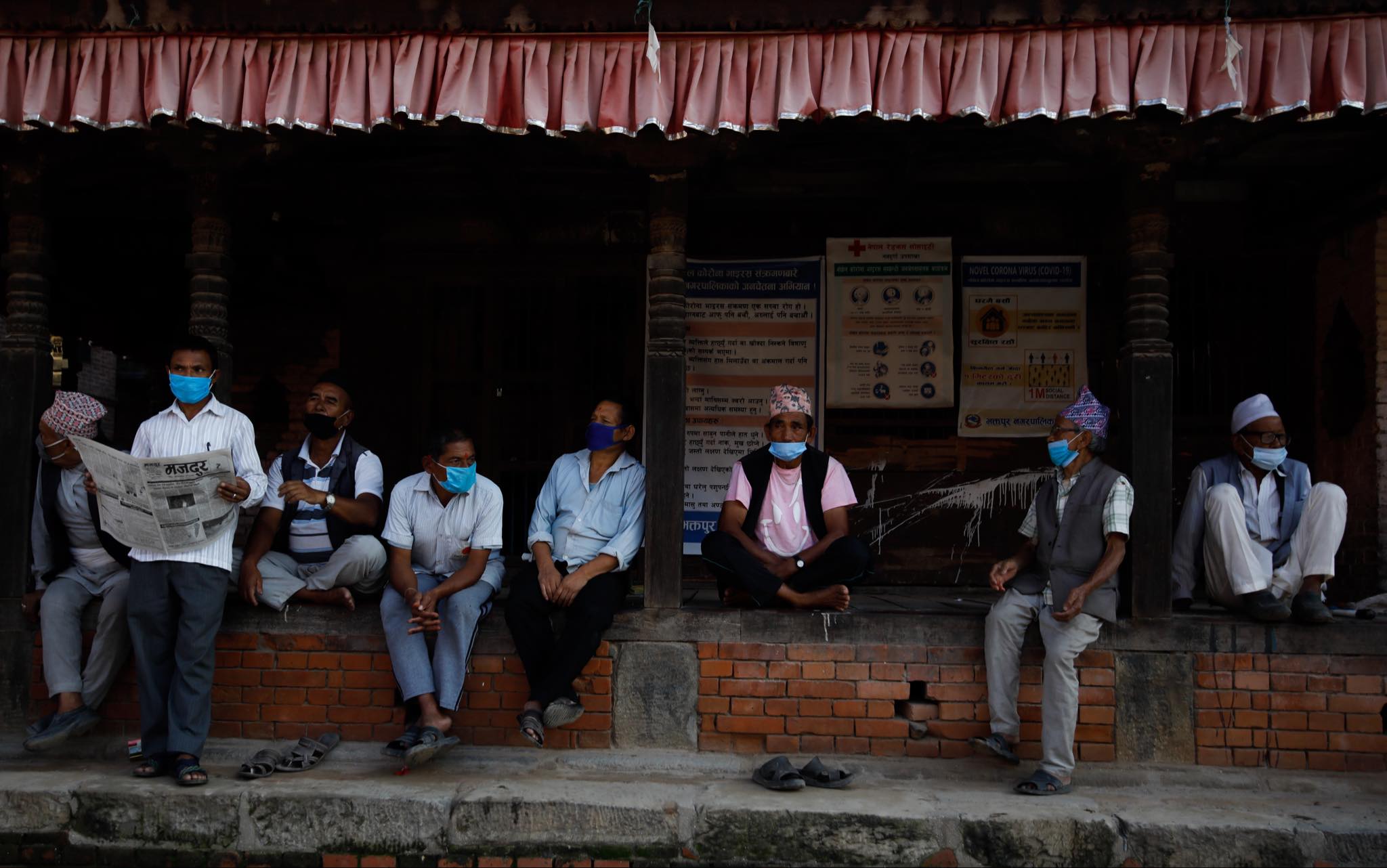
With the pre-winter resurgence of Covid-19 around the world and in Nepal, pressure is mounting on governments to procure vaccines to protect their populations.
Last week, the Nepal government set up a committee of secretaries of the Finance, Home, Health and Foreign Affairs ministries to study vaccines under development as well as procedures to procure them. But Nepal is far behind other countries, which have already ‘booked’ their future supplies.
On Wednesday President Bidya Devi Bhandari signed an ordinance empowering the government to import Covid-19 vaccines from international pharmaceutical companies, and to use them even if they are authorised only for emergency use.
VAX POPULI, Sonia Awale
However, there is no effective strategy to ensure vaccines for all as distribution in Nepal comes with the challenge of taking it to poor and remote corners of the country. Experts fear that even when the vaccines become available, the campaign will be plagued by the same socio-economic inequities that afflict the medical sector.
“We need to immediately start identifying vulnerable groups like frontline health workers, the elderly or those with comorbidities to prioritise for immunisation,” says Bikash Gauchan, a physician at Bayalpata Hospital in the under-served western district of Achham.
“We also need to set up proper cold chain facilities across the country as soon as possible and have a well thought out distribution plan so that when the vaccine does arrive, we can hit the ground running,” he adds.
The silver lining is that Nepal already has a successful childhood immunisation network that has successfully mobilised Female Community Health Volunteers, and they can deliver vaccines to the homes of the elderly who cannot make it to clinics. Monitoring the follow-up second dose for some of the vaccines will be crucial, although Nepal’s health system has experience with maintaining a cold chain for other campaigns.
Nepali diaspora hit by Covid surge, Nepali Times
Despite recent breakthroughs in trials (see box) public health experts stress the importance of exploring vaccine supply options closer to home. As of now, 11 vaccines developed in several parts of the world are in the third phase of clinical trials with many of them expected to be as effective.
Neighbouring China and India are at the forefront. And Nepal should have begun its ‘vaccine diplomacy’ much before this to secure its supply of shots.
There is also the uncertainty of vaccine efficacy depending on the strain: the same vaccine could be highly effective against people in the West but not as much in South Asia where people suffer from chronic malnutrition and multiple infections.
“For a working vaccine to be made within a year is an amazing victory for science but we also need to know that these vaccines are designed for their population. So I’d want to know more about the vaccines in India and China,” says Sameer Mani Dixit of the Centre for Molecular Dynamics Nepal. “Particularly China, as it was where the pandemic started but has since controlled it effectively unlike rest of the world.”
Buddha Basnyat of the Patan Academy of Health Sciences agrees. He says: “China looks at the reality in our backyard. So a more suitable vaccine for us could come from the Chinese, particularly because they have a track record of having developed better vaccine for this part of the world.”
Indeed, the JEVAX made by the researchers in Chengdu is now the most widely used jab against Japanese Encephalitis because it’s more cost effective compared to its western vaccines.
Nepal Health Research Council is once again considering conducting Phase III clinical trial of Coronavac by China’s Sinovac Biotech after an initial divided opinion over its safety. The vaccine has shown quick immune response in mid-stage trials in South America and parts of Asia.
In India, The Serum Institute has anticipated demand by already manufacturing 40 million doses of AstraZeneca’s potential Covid-19 vaccine. It will also soon manufacture Novavax.
Similarly, researchers at the Indian Institute of Science have designed a protein-based heat-tolerant vaccine that can stay stable for a month at 37°C, and could endure temperatures as high as 100°C if freeze dried, a feature that could be a game changer for mass vaccination campaigns in lower and middle income countries in Asia and Africa.
The other factor to consider will be the duration of the immunity after each vaccine shot, as well reinfection groups and if antibodies developed in the first episode helps fight the mutated forms of the virus.
With Covid-19 crisis continuing to spread rapidly across Nepal and at 10 fatalities per million population (same as Pakistan and much higher than China’s 3), it is not too early to start dialogue with Gavi, the vaccine alliance, COVAX and agencies like the World Bank and World Health Organisation to help procure the most cost effective approach to vaccines most suitable to Nepal’s conditions.