
It was inspiring for me here in Norway to read Radhesh Pant’s Guest Editorial in Nepali Times on 4 February titled ‘A Chance for Nepal’s Political Renewal’.
Now the time has come, we hope. Youth groups have decided to stand firm in the process of making Nepal a more democratic society. They are concerned, they have the competence and talent, and they are dedicated.
For many years, I have followed the ups and downs of Nepal's politics: the re-introduction of multi-party democracy in 1990 allowing civil society organisations, the Maoist insurgency ending in 1996, the palace shooting in 2001, king Gyanendra abdicating in 2006, Nepal becoming a republic in 2008, and the ratification of the new Constitution in 2015. Right up to the demonstrations and violence in September last year.
All these upheavals took place in Nepal within just over three decades. Defining democracy as a system in which every citizen can vote, we must remember that it took 100 years for many European countries to become democracies, in some countries even longer.
Norway is one example of the latter: after 400 years as a Danish colony, Norway was an autonomous country (except for foreign affairs) in a union with Sweden, meaning we had a common king with Sweden, but a Parliament with Norwegians.
This status changed in 1814, Parliament gathered at an estate north of the capital to declare independence from Sweden and pass a new Constitution – it could be called a silent coup d’etat.
Norwegian women obtained the right to vote only in 1913. It took us 400 years to become independent country, and nearly a century for its citizens to obtain the right to vote.
A democratic process therefore can last long, it is filled with frustration, anger, optimism, pessimism. In Nepal, I have noticed all these emotions, in the media as well as among people.
Since 1999, I have been fortunate to meet Nepalis, many of whom have become good friends, who have told me about personal experiences and their views on politics and on local conditions.
Nepal is a complex society, and many aspects are still difficult for me to understand. But I do indeed feel confident to agree with Radhesh Pant that political renewal in Nepal is possible.
GLOBAL AUTOCRATISATION
Elections alone do not guarantee a functional democracy, however, and Nepal is not the only country that must cope with political and social challenges – just look at historical and recent events throughout the world today.
Corruption has been a stubborn challenge in countries on every continent, reducing people’s trust in politicians and the political system. Power sharing cannot be taken for granted any more, political and administrative decisions are made without concern for the rule of law, and autocratic leaders contribute to public institutions being broken down from within.
In the US and Europe, migration has become a polarising issue and has stoked conflict among citizens which can be exploited for political gain by populists to navigate among power positions.
With all this happening, it is encouraging to observe that citizens, especially the young generation, are mobilising against such trends and to save democracy.
The GenZ movement in Nepal followed youth uprisings in Bangladesh, Indonesia, and Nepal itself was followed by similar ones in Thailand, Morocco, as well as in other parts of the world – just a few weeks ago, also in Albania.
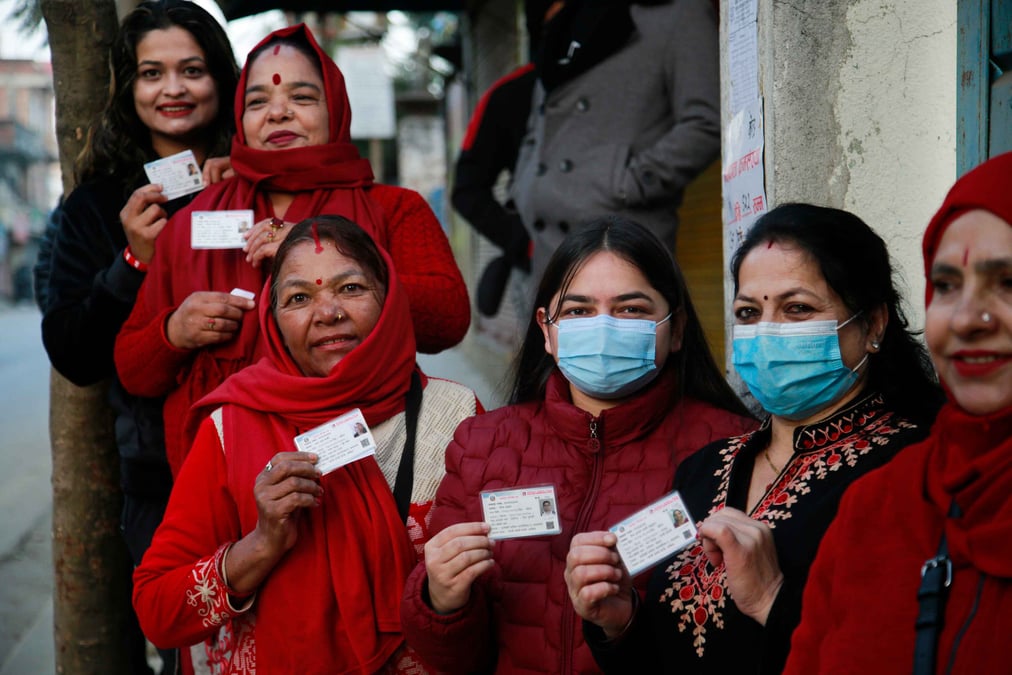
The election on 5 March, and the negotiations that will inevitably following to form a government with clear policies for the future will be an indication that our optimism is well founded, and that every Nepali – young and old, poor and rich, male and female living in the centre and periphery -- will obtain better possibilities to participate in political decision-making.
Ultimately, this will make it possible for Nepalis to improve their social condition, as well as contributing to their country’s democratic development.
Marit Bakke is a retired Professor of Sociology. Since 1984, she has been in Nepal regularly, to collaborate academically with Nepalis, including as a member of the International Board of Patan Academy of Health Sciences (PAHS).