
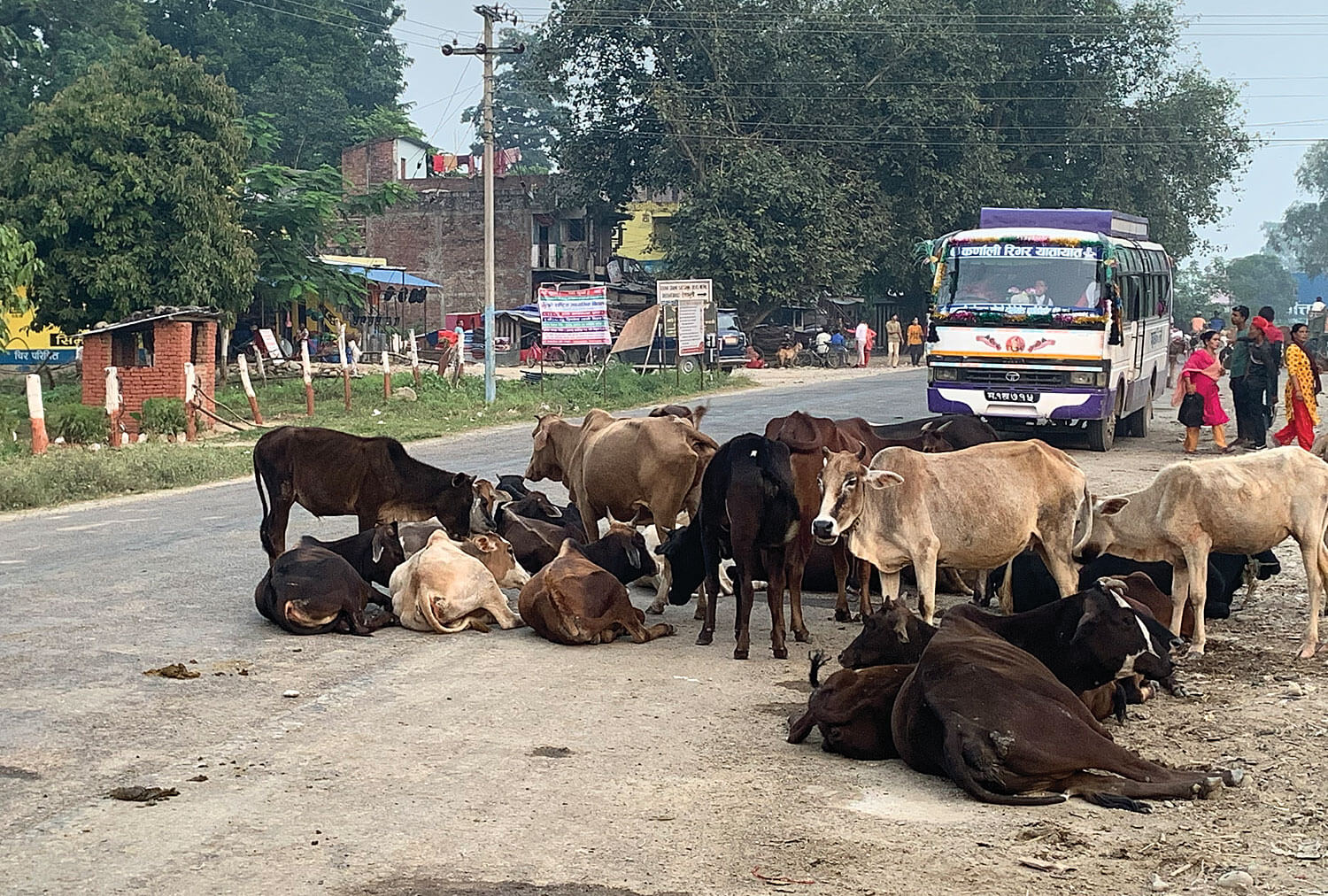
The first thing one notices these days while travelling by road in the Tarai are hundreds of cattle blocking the East-West Highway, mainly at intersections like Atariya or Kohalpur.
The ‘cow emergency’ hit the headlines in September, when 24 cows were found dead below the highway in Surkhet and hundreds of others were wandering in the jungles. Police investigation revealed that the cattle were being transported from Nepalganj to Dailekh as part of an effort by the municipality to reduce the population of street livestock.
Read also:
In an animal farm, Editorial
What few people know is that dozens of cattle had died earlier this year when Sukla Phanta Municipality near Dhangadi spent Rs5.5 million to round up cattle and put them in shelters, where most of them died of starvation and lack of care.
There is no estimate of the number of cattle on the highways near border towns of the western Tarai, but on a recent trip reporters counted hundreds just on the stretch between Dhangadi and Atariya. Locals said there were a lot more street cattle previously, and the numbers had actually gone down.
Local officials said the main reason for the cattle crisis was the ban on beef in north Indian states, especially after the election of high priest and Hindu nationalist politician Yogi Adityanath as Chief Minister of Uttar Pradesh in 2017. Media reports of lynchings by religious extremists of Muslim traders suspected to be transporting cows put a stop to the unofficial ‘export’ of cattle from Nepal to India.
Read also:
Saving Nepal's last wild dogs, Yadav Ghimirey
A dog with altitude, Sonam Choeyki Lama
There used to be a thriving crossborder trade in aged oxen and cows that had stopped giving milk. But sensitivity about cow slaughter in India after the rise of the BJP, as well as the new border fence on the India-Bangladesh border, has meant that the cattle are abandoned on the streets.