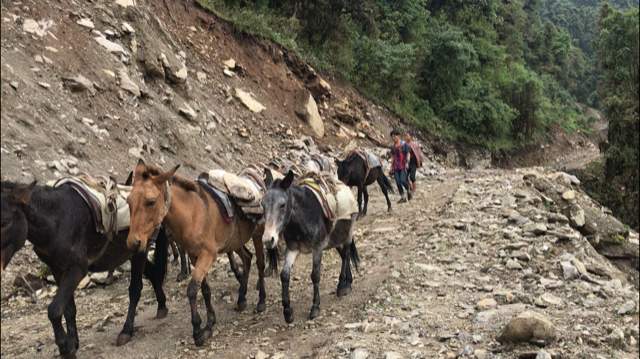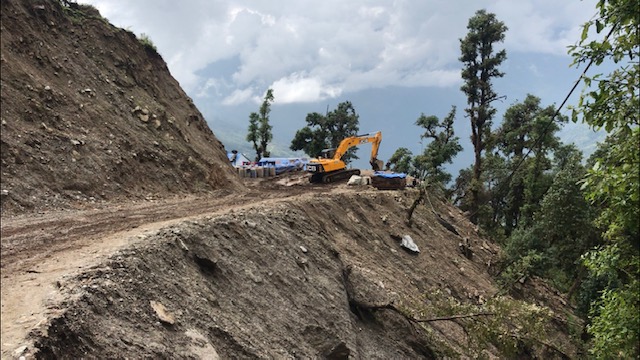
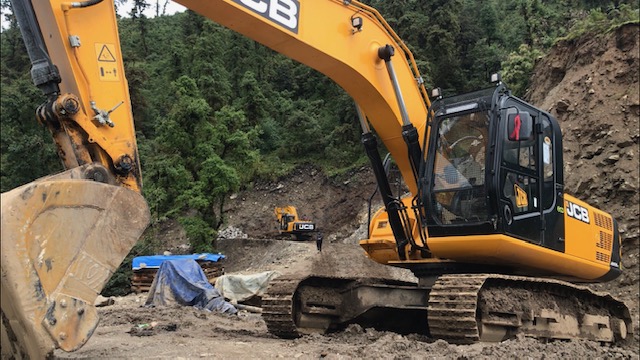
Excavators at work on Thamdada, 24km south of Lukla, despite the fact that the Khumbu Municipality has run out of money to complete the Phaplu-Chaurikharka road. All photos: SURENDRA PHUYAL
Excavators are clawing through sheer cliff faces, rocks tumble down to the Dudh Kosi below, and once in a while the sound of dynamite echoes in the gorge.
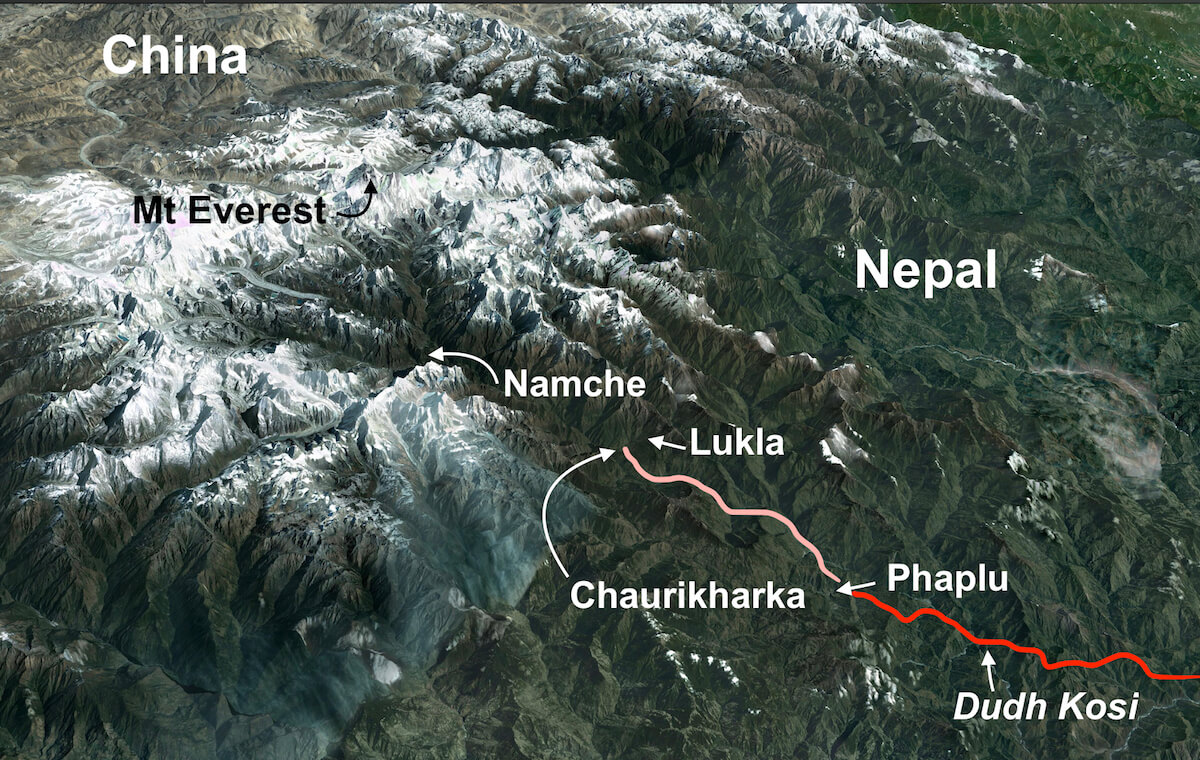
A new road linking the town of Chaurikharka just below Lukla to the rest of the country is due to open by December 2022, and work is going on despite the pandemic.
Although the road will not enter the Sagarmatha National Park which is a UNESCO World Heritage Site, it will make trekking and climbing in the Everest region more accessible. But it will turn Lukla airfield largely redundant, while locals fear an erosion of the region’s Sherpa culture, architecture and lifestyle.
On the Chinese side of Mt Everest, there is a highway from Lhasa right up to North Base Camp below the Rongbuk Glacier at 5,200m. Since 2016, it has become vital to transport goods and people for expeditions to the world’s highest mountain from the north.
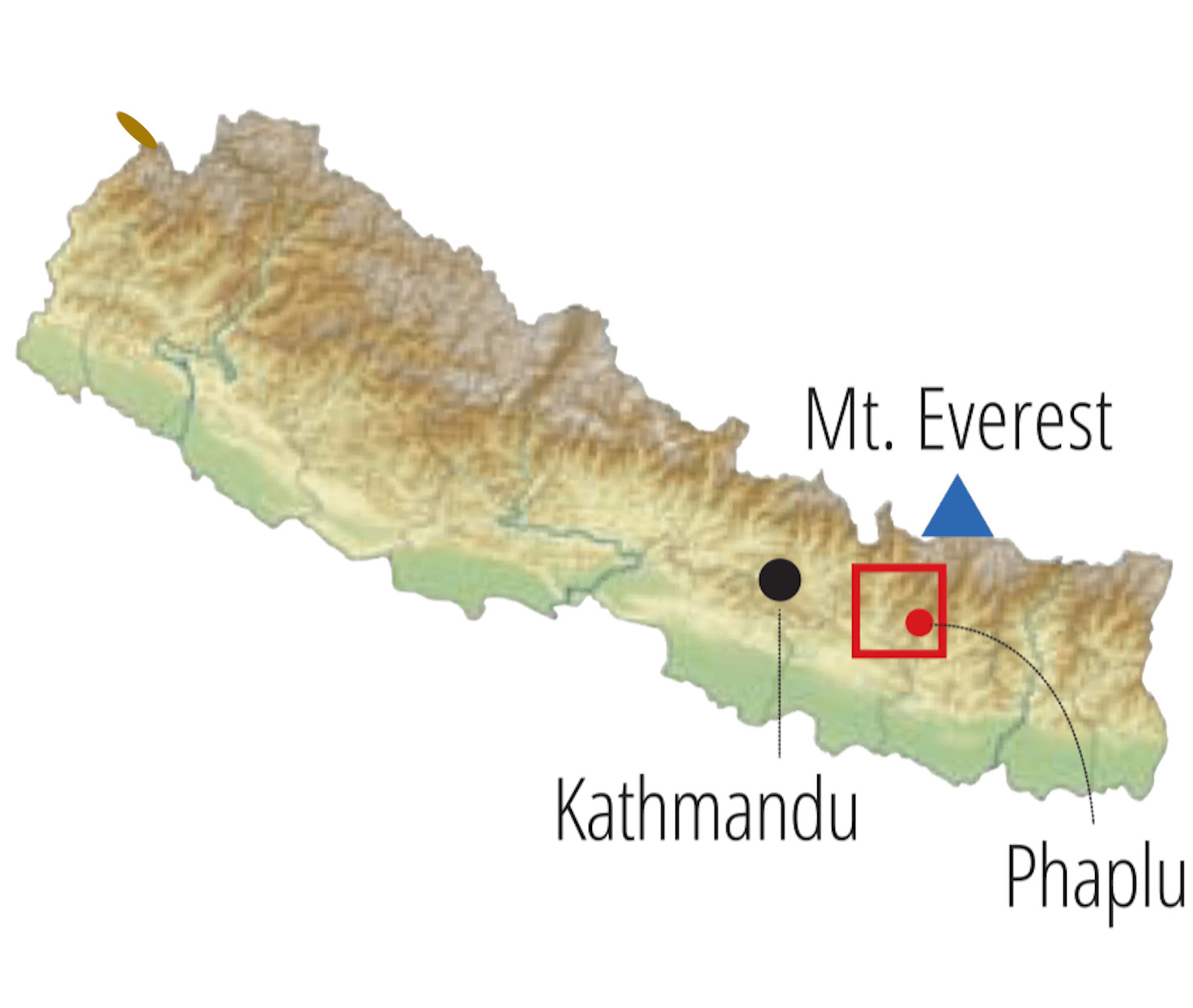
Kathmandu is already linked through a 277km highway to Phaplu of Solukhumbu district, which is a two-day trek below Lukla. Work started on the 77km road linking Phaplu to Chaurikharka six years ago, but progress has been slow due to difficult terrain, delays due to the 2015 earthquake and Blockade, and lack of money.
This means that for at least the next two years, trekkers, climbers and local people will either have to trek from the nearest roadhead near Phaplu or Jiri-Shivalaya-Bamti Bhandar in Ramechhap district, or as many do, take a 30-minute flight to Lukla from Kathmandu.
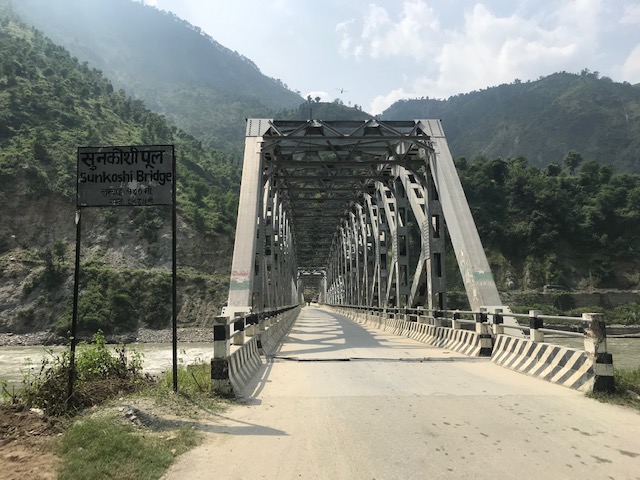
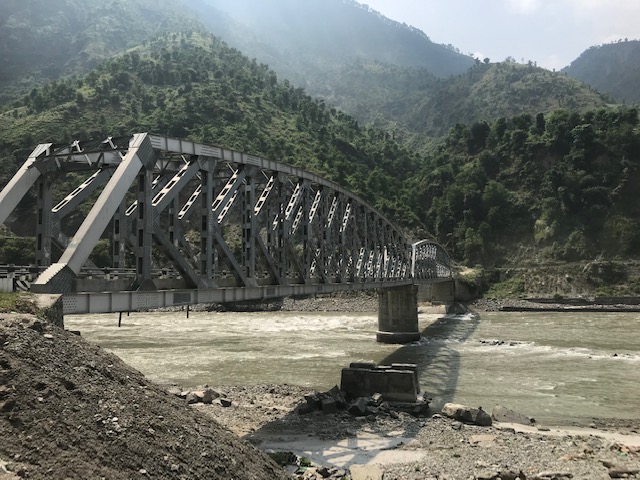
Sunkoshi Bridge at Harkapur on the highway from Kathmandu to Phaplu.
Like all infrastructure projects in Nepal, completion of this road is delayed. Khumbu municipality has run out of money for the remaining 24km dirt track to Chaurikharka from Thamdada.
The completion of the road was the pet project of the former Chair of Khumbu Rural Municipality, late Nim Dorje Sherpa who died in June. He believed that connecting Phaplu to Lukla would further lift living standards, bring down prices, and reduce the drudgery of his Sherpa people.
“It’s still our top priority project,” says Lhakpa Tsheri Sherpa of Khumbu Municpality, adding that the construction has been delayed somewhat by the Covid-19 crisis which has also devastated the region’s trekking and climbing income this year.
Khumbu used to earn Rs200 million a year just from trekking and climbing fees, not counting the what visitors paid for lodging, food and portering. This year, the income is down to Rs60 million.
“It is because of this loss of income that the construction of this last 24km stretch slowed down,” explained Binod Bhattarai, Chief Administrative Officer of Khumbu Municipality. “Now there is hardly any money to complete the project. We are struggling.”
The Municipality has decided to open Khumbu for trekking and climbing even though nine Covid-19 cases were detected in Namche Bazar last month, and it could have spread. Local people have stopped trekkers from going above Pangboche on the Everest Trail.
South of Lukla on Thamdada, bulldozers are at work on the track, while flights to and from Lukla buzz overhead all morning. The road alignment then drops precipitously to the river and Surke helipad below Lukla, before a final ascent to Chaurikharka.