With business coming to a grinding halt globally due to the COVID-19 pandemic, Nepal’s migration and tourism-based economy is being severely impacted.
Global stock markets are in freefall, the US has halted trans-Atlantic flights, Italy is in lockdown, India has stopped issuing tourist visas, schools in Japan are closed, Qatar has banned nationals from 14 countries, Saudi Arabia has halted travel to nine countries, and although the virus has stabilised in next-door China, there is a danger there of reverse infection.
But as the epidemic spreads, Nepal has officially admitted to only one confirmed case of COVID-19. Public health experts say this does not mean there are no infected people, it just means suspected cases have not been tested yet. They say the country is not prepared to deal with an outbreak.
“The situation around the world is getting out of hand, but Nepal has been able to dodge a full-blown health crisis till now,” says Sameer M Dixit, a scientist at the Centre for Molecular Dynamics Nepal. “In an ideal situation the country would be under lockdown, but right now Nepal should stop all direct flights from highly affected countries.”
Even though there are no overt signs of a health crisis, Nepal’s economy has already been hit hard and the impact is expected to worsen in the coming months as tourism collapses and air travel is further curtailed.
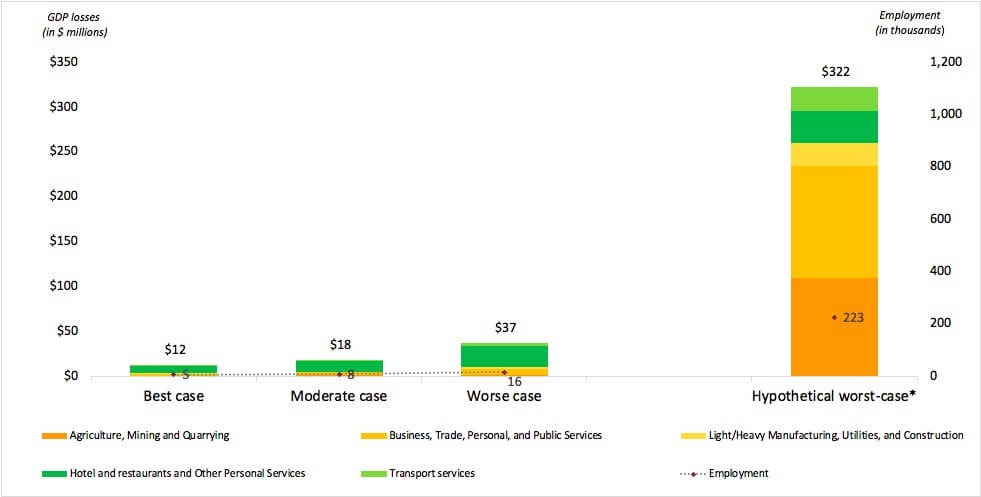
The Asian Development Bank’s ‘COVID-19 Economic Impact Assessment Template’ released this week lays out the best- and worst-case scenarios for countries in the region. For Nepal, the bank predicts a loss of up to $322 million.
The tourism sector has been impacted by travel restrictions imposed by Nepal and other countries, and airlines cancelling flights.
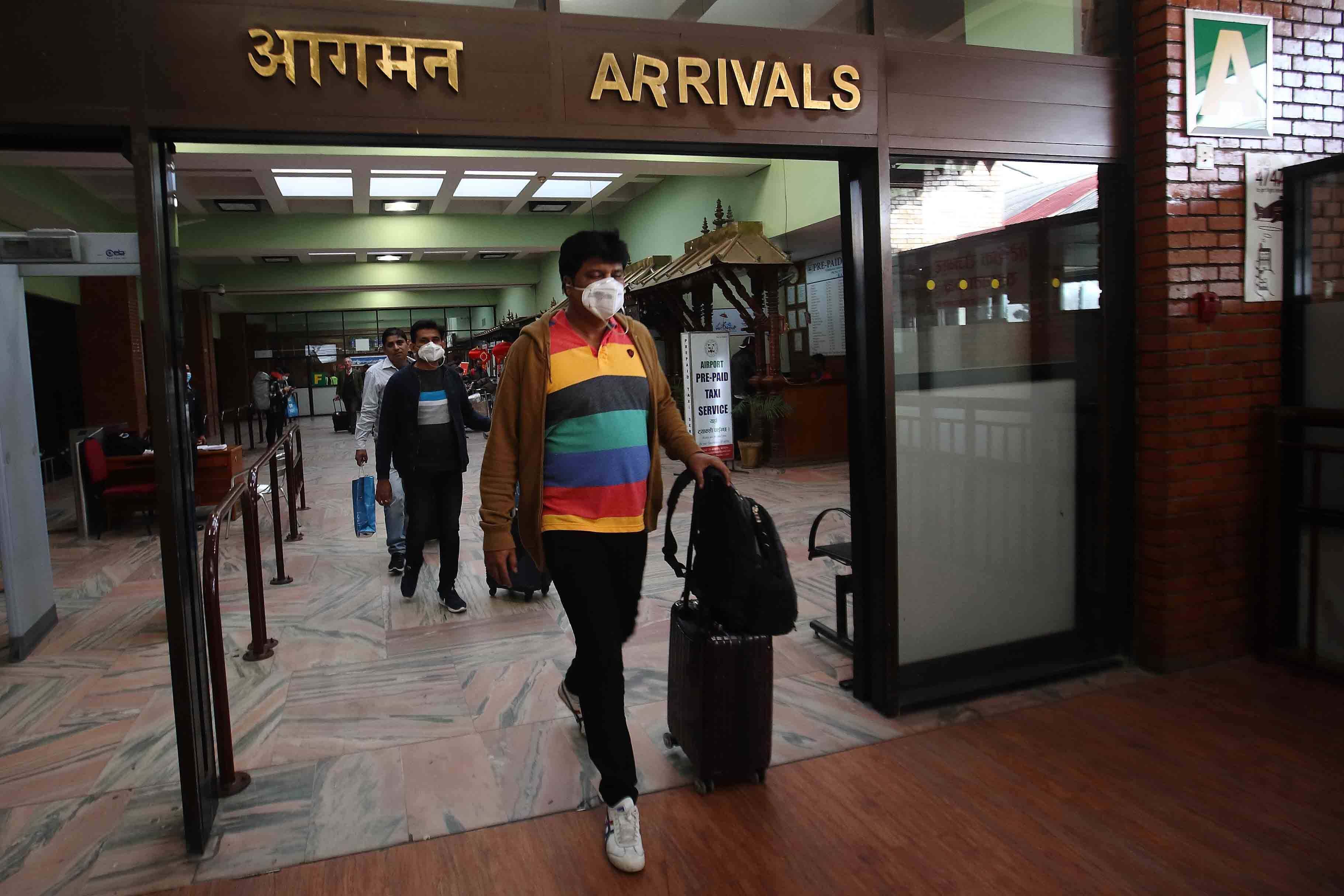
The government decision late Thursday, after the print edition of this paper had gone to press, decided to revoke visa on arrival at Kathmandu for nationals of all countries. Visitors will still be allowed to enter Nepal but they will require a visa from a Nepali mission abroad and also a Coronavirus-free health certificate. The visa rule be effective 14 March to 30 April for now.
The move comes one day after China cancelled all expeditions from its side of Mt Everest. The Nepali government has also cancelled all climbing expedition permits including Mt Everest for the spring season.
Read also: Why Nepal must watch Coronavirus, but not panic, Sameer M Dixit
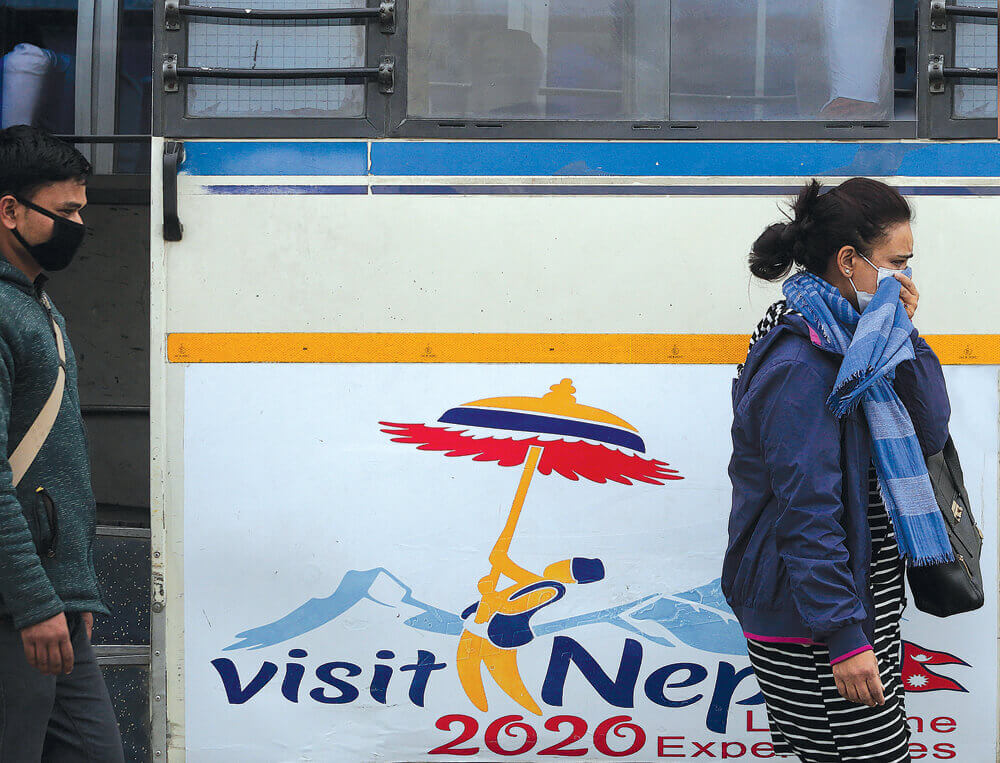
Even before the government called off Visit Nepal Year 2020, the campaign was criticised for lack of international promotion and the money being wasted on domestic extravaganza. Although tourist arrivals saw only a slight drop to 101,400 in February, there was a 80% decrease in visitors from China.
Official figures are not yet available for March and April, but the travel industry is reporting widespread cancellations. Many international conferences and sports events have been postponed. Hotel occupancy rates are dropping at what should have been peak season. Trekking and mountaineering expeditions have gone ahead but there has been a 50% decline in the number of clients. There are also reports of cancellations for April.
“Hotel bookings are down by 60% in the 5-star hotels around Nepal,” Shreejana Rana, President of Hotel Association of Nepal, told Nepali Times. “We had expected a surge in bookings after Chinese New Year and during the spring from American and European tourists but that isn’t the case.”
The first airlines to cancel flights were the ones operating to Chinese destinations: Himalaya Airlines, Sichuan Airlines and Tibet Airlines. Air China, China Southern and China Eastern are still operating flights, but with reduced frequency and smaller aircraft.