

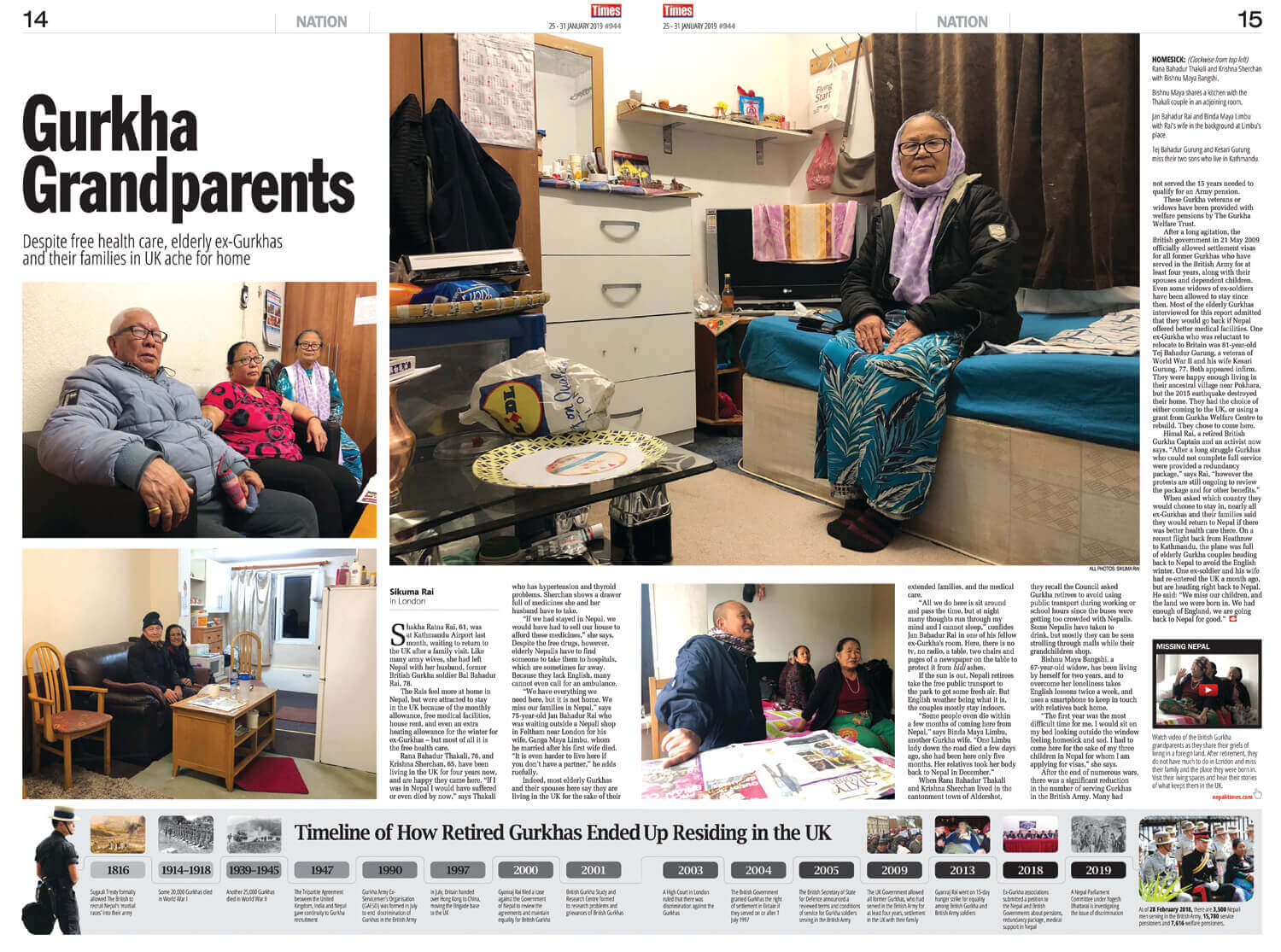
In her recent article in this paper ‘Gurkha Grandparents’ (#944) Sikuma Rai movingly describes the plight of many elderly Nepalis now living in the UK, most of them ex-Gurkhas and their wives. The families get regular pension, heating allowances and rent support, free public transport, as well as access to the British National Health Service.
But there are also costs, which include living away from their home country in a strange land among strangers, without the personal, social and cultural comforts of their villages. Many pine for Nepal, and some decide to return home. But women, particularly widows who speak little English, have few non-Nepali friends, and remain isolated in their homes in towns like in Salisbury or Aldershot. The weather does not help, and most remain house-bound or within a limited area of the city missing their children and grandchildren.
Read also: Gurkha Grandparents, Sikuma Rai
The Gurkha Welfare Trust runs advice centres which work closely with government bodies like the Royal British Legion to support army veterans. Numerous local charities unconnected with the army also help, as well as community services for older people, including mental health diagnosis, treatment and support, provided by the local council and by the health services.
But much of this is cold comfort to elderly Nepali men and women who have settled in Britain, and who would, ideally, flock back to Nepal to be with their families and friends -- if only they could be assured of more financial support, including better and less costly health care.
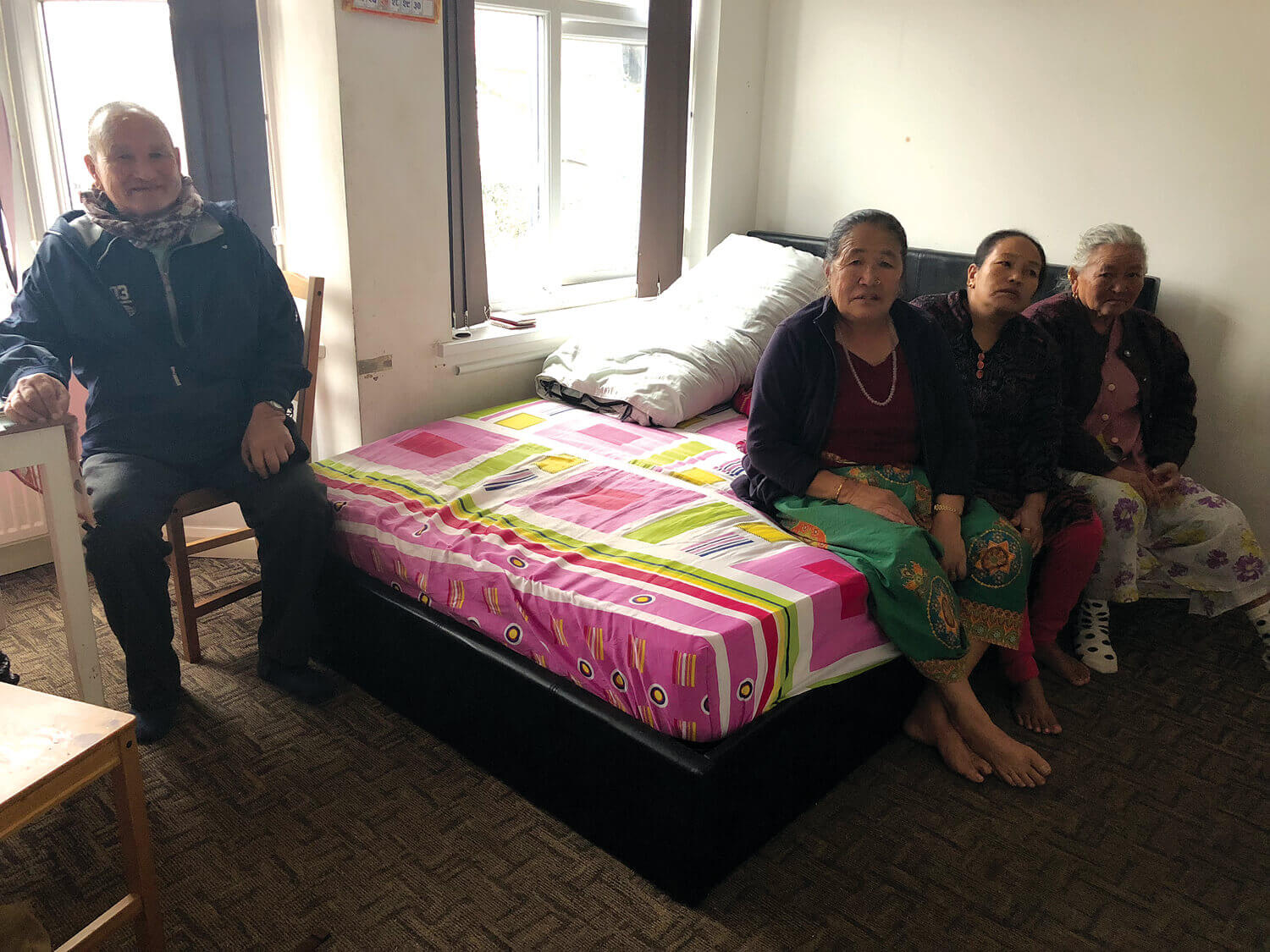
The elderly in Nepal have traditionally been able to count on family support. But, as more older people live longer the financial burden on families has increased. Nepal’s average life span has increased from 35 for men and 37 for women in 1961, to 69 for men and 72 for women in 2014. By 2018, there were nearly 3 million people over 60 in Nepal. Family fragmentation has also resulted in physical separation between older grandparents and their children and grandchildren.
Consequently, even back in Nepal, more elderly men and women are living apart from their closest family members than ever before. Many are now suffering from the same problems as do those settled in the UK, but without pensions, allowances, and access to free medical services.
Read also: A much older tomorrow, Sonia Awale
There are relatively few specialised institutions for support and care of the elderly in Nepal. The Gurkha Welfare Trust cares for ex-Gurkhas and their families with Welfare Pensions to veterans and widows and medical treatment. But there are very few examples in Nepal of private ‘care homes’ and ‘retirement villages’ that exist in the UK.
There is now some state support, but it remains pitifully limited. The non-contributory social pension scheme introduced in 1995 was intended to provide allowances to older people aged 70 and above, to older dalits and people living in the Karnali Zone aged 60 and above, and to poor widows aged 60 and above. The allowance was doubled to, Rs2000 and the age of eligibility reduced to 65, but scheme remains inadequately implemented.