

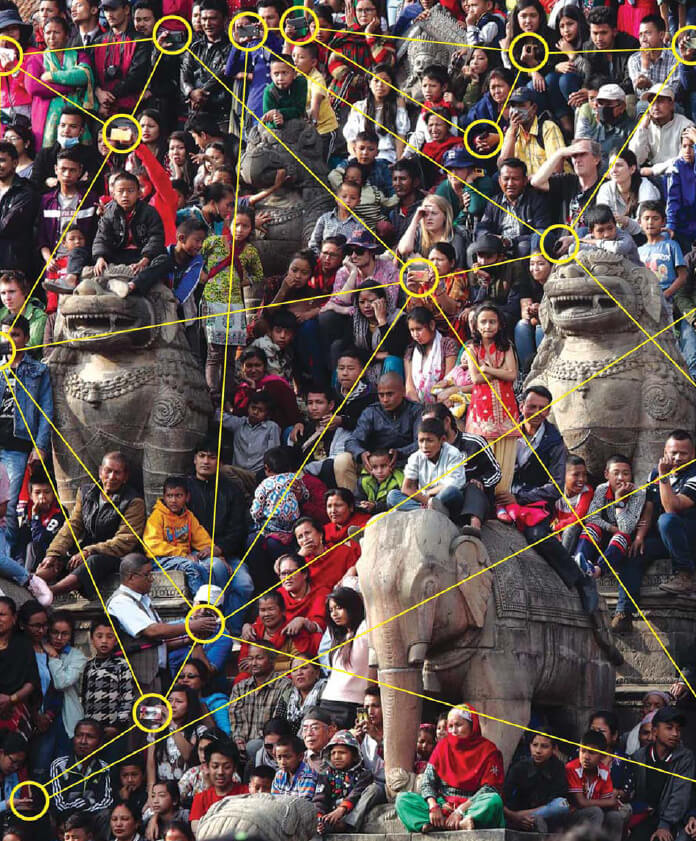
Africa marked the end of World War I two weeks after Europe because it took that long to get out the message that the war had ended.
Months after the end of World War II, Gurkha soldiers were still in the jungles of Burma looking out for Japanese troops, unaware that a peace agreement had been signed.
When British officers asked them how they found their way back, one of them produced a road map of London. Today, they would use Google Maps.
In a recent episode of James Corden’s The Late Late Show, the CBS late night talk show had to make a real effort to explain to younger members in the audience what a 'letter', 'envelope', 'postage stamps' and 'mail boxes' were.
Indian Prime Minister Narendra Modi elaborated on his connectivity strategy in an address to Nepal’s Parliament on his first visit to Nepal in 2014 with the acronym 'HIT' standing for highways, information and transmission lines.
This week, the number of people online throughout the world crossed 3.9 billion – more than half the global population. It took 100 years for the first billion people to say 'hello' on a landline phone. In the early 1990s, the only way to get a phone line in Nepal was to pay a hefty bribe or to register a company and to get a landline.
In India, the joke in the old days was that 5% of the population had phones, and 95% was waiting for a dial tone. And across the border in India 'ISD, STD' were ubiquitous acronyms because long after Nepal’s telecommunications went digital in the 1990s, India still had analog phones under the ‘Be Indian, Buy Indian’ philosophy. Then it was cyber cafes, and now even those have been replaced by smartphones.
In Nepal, the government does not distribute free mobile phones, and there are no donor-funded projects subsidising these devices. Yet everyone, rich or poor, has a phone. On the other hand, the government with donor support has been building toilets and providing free material and training. Yet, many people are still defecating in the open.