

Four years ago, on a Saturday just before noon, the earth below us began to move. The sense of helplessness overwhelmed us as we tried to hold on to something not moving, and quickly realised that everything was moving. Telephone poles swayed, buildings bobbed, ponds overflowed, birds took to the air as trees shook.
The Dharara Tower crumbled, killing at least 60, and 700 temples and monuments came down in clouds of dust. Over 1,400 health facilities, 700,000 homes, 32,000 classrooms were damaged, and nearly 9000 people lost their lives across Central Nepal.
A month later, the Post Disaster Need Assessment (PDNA) put the cost of the damage at over $8 billion. The earth kept moving in hundreds of aftershocks, some of them strong enough to be earthquakes in their own right. The whole world converged to rescue and help in the recovery process.
Four years on, thousands of Nepalis are not just still living in make-shift shelters, but they are confused. Where has the $4 billion in aid the world pledged gone? Why is it so difficult to get Rs300,000 of relief money?
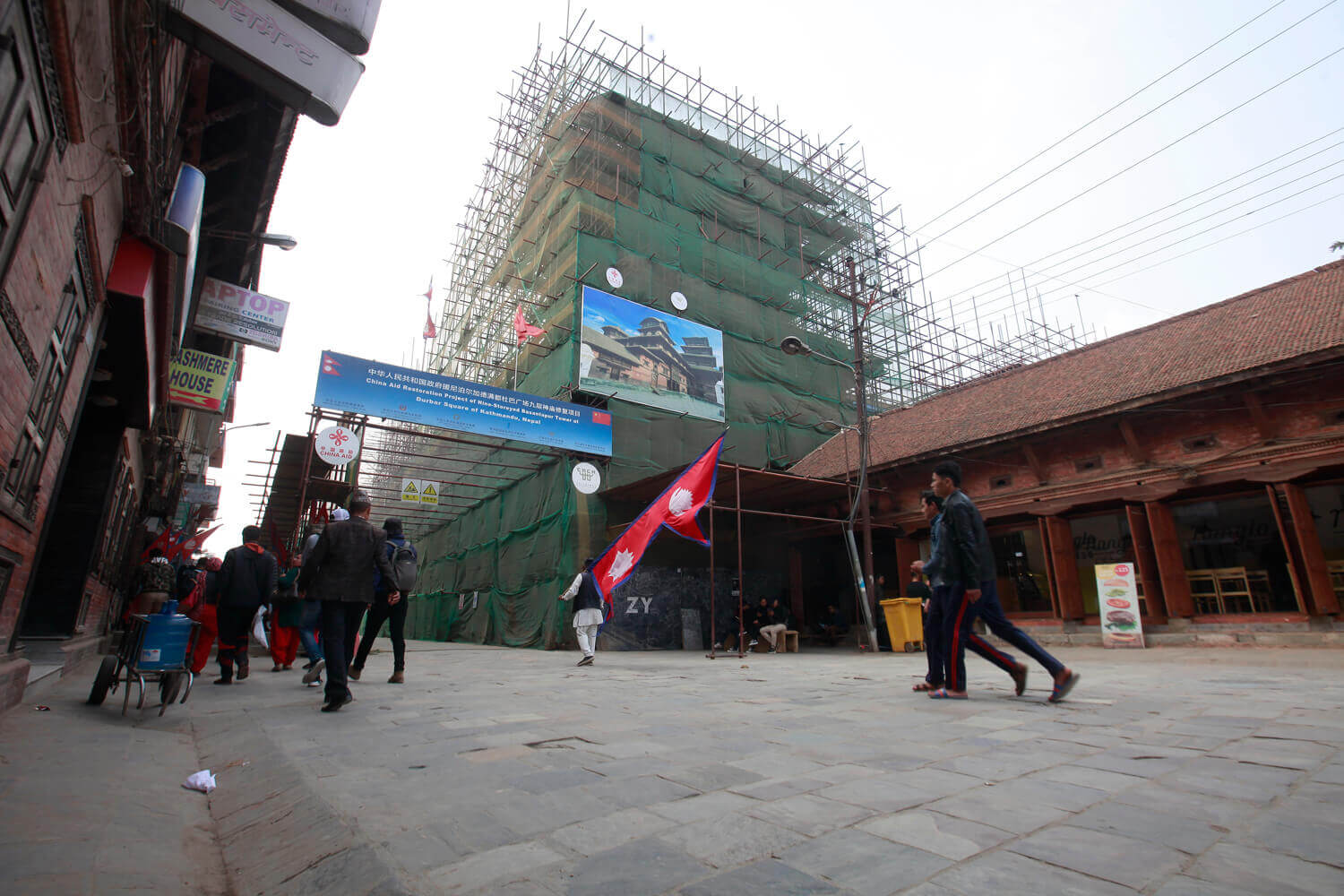
Many schools, hospitals and private homes have been rebuilt. Monuments that had been in scaffolding are restored. We know recovery is going to be a long term process. Standards, guidelines, rules regulations had to be made from scratch. Many villages on unsafe slopes have to be moved away from the path of landslides, and Nepal is paying a huge price for past mismanagement.
Reality is never black and white, it is grey at best. The Indian foreign minister made a huge pledge at the reconstruction conference held in Kathmandu in July 2015 to help Nepal rebuild. Four years later, the money is finally starting to trickle in.
The business community in Patan said it did not want foreign money, and would restore the Bhimsen Temple on its own. Many relief agencies and agents went into villages with more Bibles than building material. Bhaktapur rejected €10 million reconstruction aid from Germany because there were too many strings attached. Many people from all over the world who sent money and relief materials to Nepal cannot find any trace of it four years later. We have not seen any public audit of the Prime Minister’s Relief Fund that is perceived to be a ‘black hole’ into which donations disappear.