In a recent meeting with editors of Nepal’s mainstream media, six months after assuming office, Prime Minister K P Oli was grilled about fears the monolithic Nepal Communist Party he leads was drifting towards authoritarianism. Editors listed the government’s recent moves constricting the democratic space.
The prime minister assured editors that his party had not deviated from its belief in liberal democracy, and maintained that his party was impatient to bring about an economic and political transformation of the country.
Prime Minister Oli appeared worried that Nepalis were apprehensive about the future. He asked the media not to spread hopelessness by harping on the negative, because the resultant instability would once more derail his government’s efforts to steer the country towards prosperity.
Read also: Inventing a new enemy, Om Astha Rai
For a leader dubbed the most powerful since Jang Bahadur, and a prime minister commanding two-thirds majority, Oli’s sense of insecurity was puzzling. He hinted at forces intent on destabilising the country, and was reminded that those forces were within his own government.
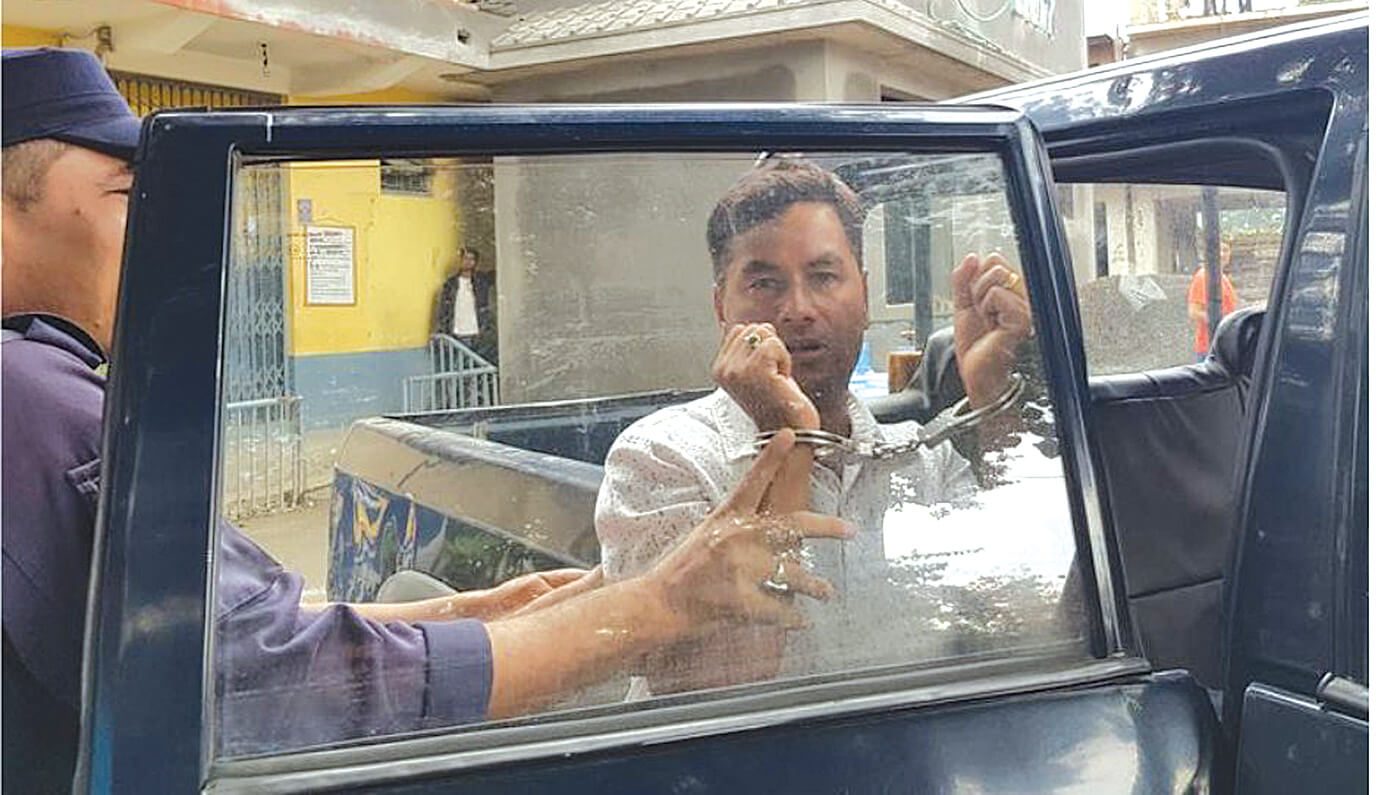
In particular, it has been the Home Ministry, led by former Maoist Commander Ram Bahadur Thapa, that has been at the epicentre of most actions dragging Oli into controversy. A university vice-chancellor was prevented from flying to Canada for a conference, and abducted from the airport for interrogation at Baluwatar. A former child soldier was similarly prevented from boarding a flight to Thailand, on direct orders from Minister Thapa. A doctor who refused to sign a fake report for medical compensation was kidnapped by goons hired by the Home Minister’s adviser. And, this week, a journalist was handcuffed and jailed for a report he filed (pictured).
Prime Minister Oli was the lightning rod in all these incidents. The way the crises are piling up, thick and fast, it would be logical to assume that someone is deliberately trying to undermine the prime minister. The PMO has taken the flak for the police’s inability to resolve a high profile gold smuggling scandal, even though the investigations come directly under the Home Ministry.
Read also: No to The Ugly Nepali, Kanak Mani Dixit
The Kanchanpur rape case has been grossly mishandled by police, who seem complicit in the crime, framing an innocent person and doing everything in order not to catch the culprit. Nepal's police was brazen about killing suspected kidnappers in a broad daylight, encounter-style, recently in the capital. The buck has stopped at Baluwatar.
The Oli administration’s backing for provisions in the Criminal Code and the proposed Privacy Bill, constricting the space of free media, also casts doubt on the prime minister’s assurances he will protect freedoms. It is surprising that a leader who has been jailed for the defence of democracy should, himself, now go on the offensive against a free press.
Let us remind ourselves that the NCP was created following an electoral alliance between the Maoists and the UML. The unification process itself was touch-and-go thanks to fierce bargaining for party leadership and rotational prime ministership.