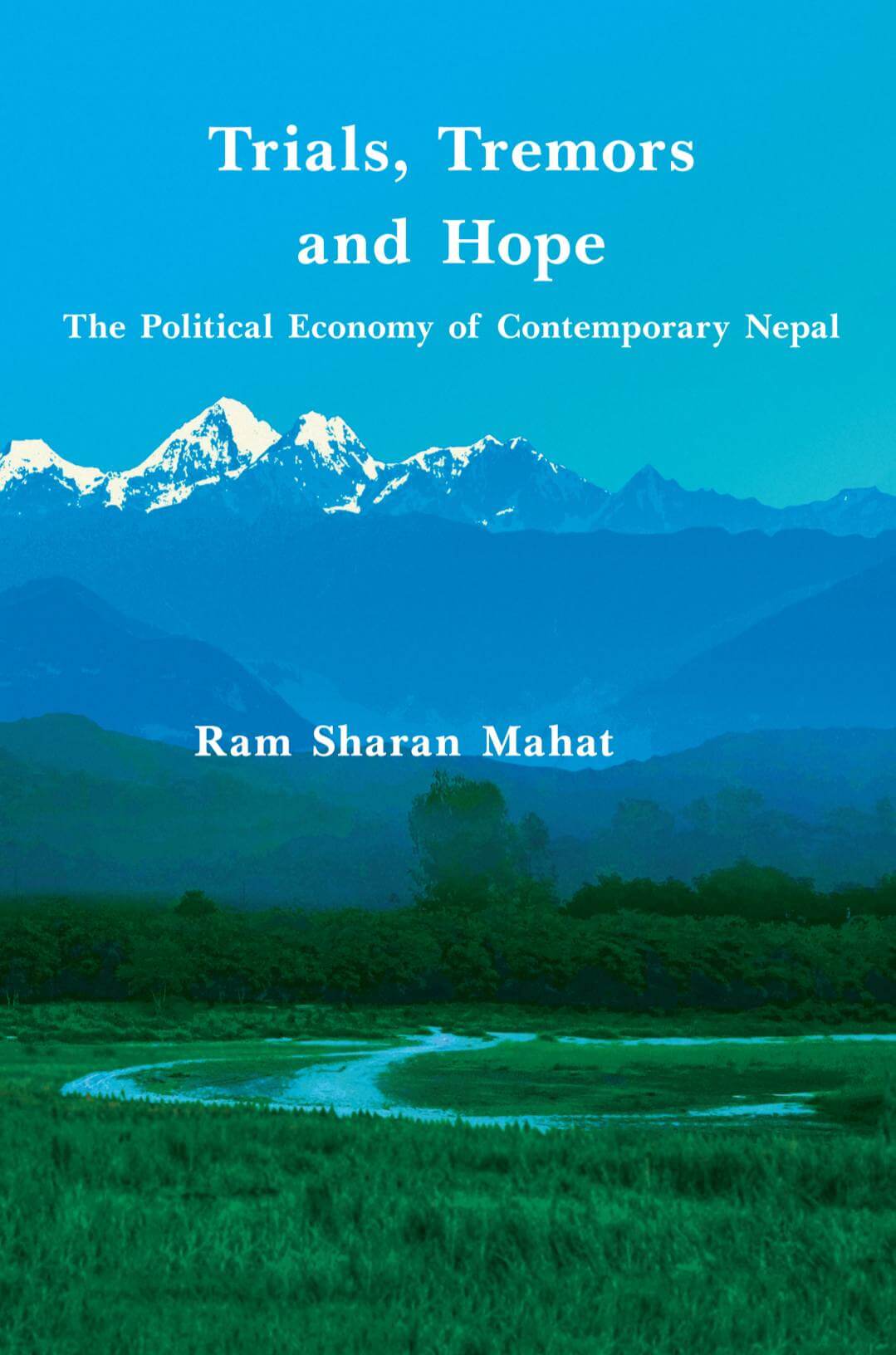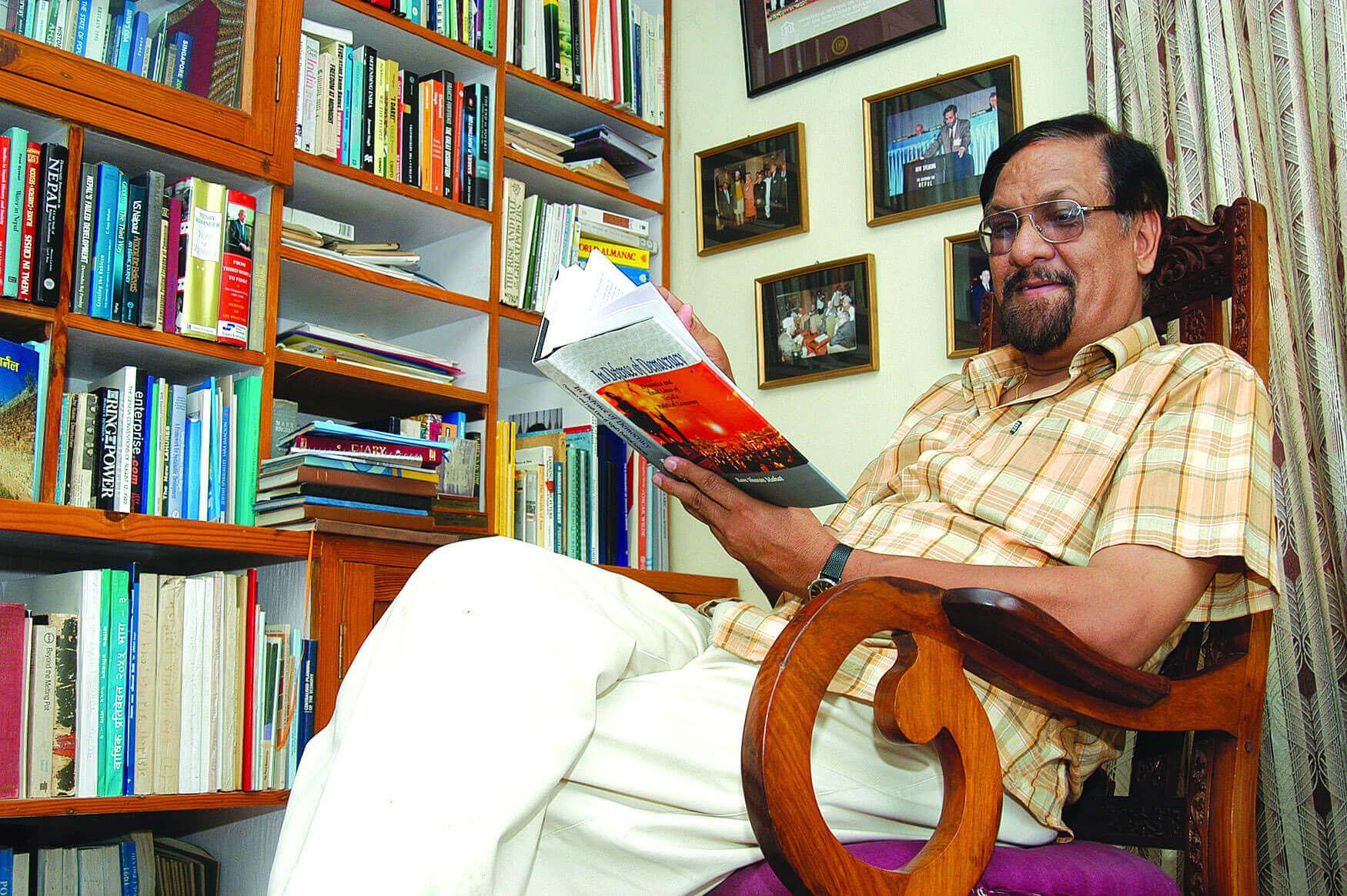
Ram Sharan Mahat, former foreign and finance minister of the Nepali Congress, has published an important book that serves as an explainer and update on Nepal’s political transition and state restructuring exercise. It is an encyclopaedic dive into the political economy of present-day Nepal, useful not only for non-Nepali readers, but also Nepali students seeking to understand history, trends and context.
A senior member of the Nepali Congress party, Mahat lost his seat in Parliament in 2018, after having consecutively won four parliamentary elections from Nuwakot since 1994. This forced respite actually allowed the economist-politician the time required to pen his thoughts on critical national events of the past two decades, committed as he is to the middle way that shuns populism and profligate governance.
This work, together with Kul Chandra Gautam’s Lost in Transition (2014), provides antidote to the English language narrative of the conflict and post-conflict transitional era, which has been presented mainly by writers bowled over by radical leftism. Trials, Tremors and Hope also complements Mahat’s earlier work, In Defence of Democracy (2005), published even as King Gyanendra sought to convert Nepal into a royal autocracy.
Mahat is the person who guided Nepal into the era of liberal economics, and rather than be coy he spends considerable space here defending his plans and policies as a six-time finance minister. He introduces us to BP Koirala’s evolving thinking on economic governance, and reminds the readers of once-important entities such as the Socialist International, and the Club of Rome and its ‘Limits to Growth’.
Mahat was sceptical of not a few elements that went into the new Constitution, fought a rearguard action on the establishment of provinces, and advocated local government energy channelled via the 75 districts. And yet, unlike many Constituent Assembly members who became lukewarm towards the document they promulgated, the author seeks ways to implement the Constitution as the only way forward.
He writes: “Managing the new federal structure is an un-tested and daunting challenge. The multiple levels of governance in a relatively small country with a history of centralised administration creates problems of overlap, ambiguity and conflict of authority… The main task at present is to building of institutional capacity at the sub-national and local levels … (with) supporting legislation, regulations and necessary manpower they are lacking at present.”
With the Constitution declaring Nepal a ‘socialism-oriented’ (‘samajbad unmukh’) economy, it has been imperative to have authoritative interpretations of the phrase to avoid confusion, and to save the society from the radical trap. The economist and administrator in Mahat does not fail in providing his elucidation. Noting that “there has been no major change in the fundamental orientation of the country” despite the regime change, he writes: “ The socialist objectives are to be met through democratic norms and values including competitive plural politics, as well as an elaborate list of fundamental rights, including those related to social protection, the security of property rights, among others.”